

Josh Dale: Signs: A memoir on venision

Sometimes, you just need to understand the signs. Whether it is your fault or someone else’s—in the forthcoming account I am about to explain, it would have been my fault—there is a baseline accountability that must be acknowledged. In the name of etiquette, this account does not fit the bill, but there is a silver lining underneath the madness that I hope you can unravel.
Texting and driving is the easiest law—or regulation—to break. Talking from experience, I do it all the time and it is the worst possible thing one can do, save for a DUI. I check emails in the gridlock commute home. I browse Instagram on the highway. At a red light, I read the next tabloid on Facebook titled, ‘You won’t believe what Trump just tweeted!’ I take control of my four-wheeled steed as a blithe wrangler who’s tamed ten Broncos but never a bull. Sometimes, you never know what to expect.
This afternoon, around 6 PM, I was, again, glancing at my phone as I shouldn’t have. The sun was waning and the clouds blushed at its departure. The dense trees, which align only the westbound flank, rightfully shielded my eyes. The traffic had disseminated and the average speed was seventy miles per hour. It was business as usual in the early-autumn twilight and I was anxious to prop up my feet.
Yet, in the distance, I see the car in front of me swerve to the right. Granted, it was some one-hundred yards away and I hardly noticed the dark figure in the left lane. At first, I deemed it a fallen trash bag that had detached from a contractor’s pickup truck. However, as the ‘bag’ moved closer to the right lane, I became wary. Around fifty yards away, I made out the shape of a deer. That poor creature! It had been paralyzed from the waist down from a grazing blow and was crawling its way to the wooded shoulder. A darkened streak of blood followed it. As my eyes affixed on the grotesque animal, my heart stopped.
In an instinctual split-second decision, I dropped my phone and jammed the brakes. The rear wheels fishtailed, emanating piercing squeals, yet still, I maintained full control with both hands. The deer was moving in a uniform straight line. It had one goal and one goal only: to get into the woods. Its tongue was out. Its antlers were polka dotted. Its muscles rose and creased deeply into its fur. It was a goliath of a buck, for it didn’t even peer towards my barreling steed of doom. I could’ve grazed his snout that’s how close it was! A sensational moment passed in my brain. The moment I was parallel to the deer, I managed to lock eyes. My sealed mouth, which housed clenched, gritting teeth, wanted to scream at the unfortunate animal. I had a telepathic exchange…
“Who did this to you?”
“Help!”
“Stay back!”
“Move!”
“Brace for impact then, you wild beast!”
I waited for a gruesome splash of gore to paint the window, but it passed. The disgruntled call to the carefree Progressive agent was to never occur. Before I knew it, the deer was in the rearview.
The traffic behind me slowed as my car reduced its velocity; the gray tire smoke thinning quick. They must’ve been placing bets on me. The over/under was incredibly tight, leaving everyone on the edge of their driver seats. Was this incident going to impede my peers from putting up their feet? Would they have gasped or shouted like an unguarded blitz on third down? It’s never easy to tell with accidents. But, always, traffic slows enough to get a glimpse of the carnage. Everyone wants a peek outside the curtains of normalcy.
The deer exited purgatory. Its trial was complete. The rush of adrenaline quelled, leaving my head throbbing for a minute. I imagined the deer with but a single labored breath in its body, crawling desperately, again, up the steep hill to later die in the clearing past the tree line. It seems like a fitting end, but the culprit will never be brought to light. It never works that way, for the animals that is. No DNA tests can confirm the whiskers and fur that gets stuck within the plastic crevices. The fawn no longer drinks from their mother’s teat. They just watch in horror as their bodies explode underneath the tires. No body bags either, just buzzards. I left the phone on the floor, wishing it was in a grave. The signs were there, in a blaze of yellow; the buck outline in black contrasting brilliantly: ‘Next 5 miles’.
Josh Dale holds a BA in English from Temple University and has been previously published or forthcoming in 48th Street Press, April Gloaming Publishing, Black Elephant, SickLit, The Scarlet Leaf Review, Your One Phone Call, and others. When he’s not writing, he’s petting his rescue Bengal cat, Daisy or perfecting his stir fry recipe. He’s the founder and current editor-in-chief of Thirty West Publishing House and Tilde: A Literary Journal.
Valisa Bernardino: Art Gallery
Valisa Bernardino is a Southern California native. She holds a BS in Media Arts and Animation from The Art Institute Pittsburgh. Currently a project manager by profession, she is dedicating the remainder of 2017 and beyond to developing her artistic career.
Bernardino's art is of a lowbrow style, featuring a predominantly feminine subject. The themes range from macabre, mystical, and sexual metaphors. In a majority of her pieces, the subjects do not have eyes. This is done on purpose, as she feels that eyes are extremely expressive and retract from the overall expression of the work. She prefers to not have such a defining feature in her characters, allowing the viewer to interpret the piece with consideration to other elements. Valisa finds inspiration in various people (mostly artists and writers) and locations. However, she claims most of her pieces are self-reflective and are heavily influenced by her mood or state of mind.
Currently, Bernardino has only shared her art via social media and has been featured on various curated artists pages on Instagram. She recently has been a contributor to British art magazine, The Bread Bin and The Biscuit Tin. She also currently is working on a clothing design project, soon to be announced. By the end of 2017, she expects an online market store for prints and originals. You can view her art on Instagram @vali_saurus and she is open for commission-based projects.


Sara Sheldon: Art Criticism is Dead and Instagram Did It
Instagram is a vast terrain of patterns in self-identified groups; one of the biggest countries being “The Poets of Instagram.” After spending almost four years here I’ve gained a lot of perspective on the art of writing and existing, almost exclusively, in a social media world. After digging through the dirt under shallow-planted flowers, I’ve found most of this terrain is a landfill. Outside of its pixelated square, the contents of these posts just seem to crumble to dust in our hands. It takes a little effort as plucking one flower to unveil the hollow façade over the whole land.
“I can only think about him/her” has gone from a teen’s away message on AIM to something regarded with the sacredness of literature. The most thought that goes into these posts seems to be picking out what image to pair it with; either a shadowed, sad-looking beautiful model, a glass of whiskey (to show professional writer credentials), or a picture of a sunset. Saying something about a girl’s wild heart (a go-to favorite of popular poets), and some authoritative voice about loving her isn’t much at face value. But someone who is projecting something in a positive tone, even if it’s a misunderstood interpretation, doesn’t seem like something to shake your fist at. And if you try to you’ll be met with the usual rhetoric about supporting fellow artists, about how it isn’t your right or your job to knock someone else, about how everyone is “just out here trying to do their thing.” In short, you will be made into an asshole if you try to critique words that have been liked and shared by thousands, sometimes millions, of people.
Of the many things I could discuss around Instagram poetry, my point here is this: art criticism is dead and there are adverse consequences. People say anything can be art, and we as humans don’t have the right to confine what that is. I see this issue causing people to take great offense to doing anything but accepting peoples’ art at face value. We are no longer allowed to have in-depth discussions about meaning by objectively commenting.
If we aren’t allowed to critique how will there a conversation between art pieces and society so we can reach deeper meanings and learn? We completely forgo the idea of “something underneath” and reduce our understandings of the world and ourselves. Self-exploration isn’t possible without the concept of depth. If we can’t say this piece lacks depth, the conversation will end and the price of not hurting someone’s feelings might be erasing depth from art altogether and the shallowing of our minds continues.
Instagram writers, on a whole, reduce the art of poetry to empty-worded clichés, dismantling the altar of literature into commoners’ dumping ground for glorified tweets. The time-window for the good that could have come out of Instagram poetry has long been closed. The good could have been accessibility, taking poetry from the fancy-speak sonnets of Shakespeare to a real voice of modern times. Poetry is not supposed to be elitist, it’s not supposed to be for the upper class of literacy. But through the “anything is art” theory and our inability to judge and discuss works cause a reduction of the definition of poetry and what classifies as poetry. The everyday-ness of social media leaves no clear line where art starts as a departure from random occurrences, therefore, no deeper meaning can be derived from it.
So, what’s the endgame here? Is there any chance of being a writer of depth when the only way to get notoriety is to conform to meaningless, bite-size clichés? I believe it’s an uphill battle as the appreciation of and capacity to understand meaning diminishes, but I think we can start the conversation again. As tensions rise all around the world we will start to turn inward for answers and people eventually reach their limit for tolerating generalized bullshit perpetrated on social media. When we start to feel the emptiness still unfulfilled by empty words we will, once again, set out as people who express and explore themselves through art.
Sara Sheldon is a 25-year-old from Maine. She has one novel published, “Celeste and The Beyond”, and is currently working on the sequel. You can find her work and more information at www.saramichellesheldon.com and @saramichelle91 on Instagram
Thirty West Presents #8: Temple Night
Our Youtube is populated with videos of our features of TWP 8! Take a look below...or view our Youtube channel for even more!
Gideon Cecil: The Importance of Poetry and the Poet
Poetry has always been a part of human life. It is an art that lies in the soul and spirit of man since the beginning of time. A poet writes always of his personal life and experience. He writes because he has an indispensable desire in his heart to express his ideas to objectify his poetic philosophy about life.
The English poet Shelly said that: ‘‘A poem is the very image of life expressed in its eternal truth…’’. The profound truth in this line written by Shelly can be seen in the poetry of all the classical poets, from Homer to Shakespeare. The writing of great poetry has been the primary vehicle for expressing one’s thoughts, observations, historical events, and various philosophies from a different perspective about life. A great poem, unlike a novel or a short story, can be digested and absorbed in our souls and can become a part of us forever. The poetry of Homer, Virgil, Dante, Tagore, and Shakespeare has become a part of the literary world until today. The divinity of their poetry has become sermons and prayers over the ages.
Poets speak a language all their own. Poets think in images—words naming a sensory thing or action. Great poetry requires a reader to experience a series of sensory experiences. Having experienced the image, we need to interpret it. The vital message and metaphor are what the poet wants you to know. Poetry gives pleasure first, then truth, hidden in complex imagery and philosophy. Its language is charged, intensified and sophisticated. The imagery in poetic writing is what every poet should strive for to achieve in his literary craft. Imagery is not just the sensory object the poem will convey to the readers. It is not only the beautiful and musical patterning of words; it is truth and meaning within the words of the poet that gives us great poetry.
The illustrious American poet and critic T.S. Eliot wrote: ‘‘The dead poets are revealing themselves in the poets that are alive…’’ His knowledge in the line I have quoted here is what I have experienced as a poet. I am inspired and motivated to write when I read the work of a great poet. Inspiration will only come thusly. Poetry, I believe, is a very deep spiritual revelation compounded with creative imagination from the unseen world into the known material world.
Some philosophers and theologians believe that poetry writing is ‘intuitive writing’ that cannot be taught from mere book learning. I fully agree with them because one can be taught the literary genres and techniques about writing from an English textbook, but one cannot be taught how to write. Great poetry should be revealed to the poet by spiritual revelation for him. It is my firm conviction that poetry, as well as music and art, are a God-given gift given to the artist unknown to him on many occasions that cannot be taught at Universities. Some of our greatest Guyanese authors and poets such as Martin Carter, Wilson Harris, Edgar Mittelholzer, Philip Moore and Petamber Persaud never acquired university degrees but their writings excelled those with Ph.D. degrees. Samuel Johnson was too poor to acquire a University degree, yet he wrote the greatest dictionary and tons of books and papers. What many academics failed to understand is very simple: degrees don’t write; writers do the writing.
Intuition which we sometimes call ‘inspiration’ will push us to write lines we ourselves are unable to write by our natural intellectual apprehension. Until today, many literary scholars believe that Shakespeare never wrote what he had written because he was not educated at a University. Shakespeare was naturally gifted and inspired by God to write what he had written. The American poet and critic, T.S. Eliot, believed that Shakespeare never did any real thinking to write but wrote upon inspired thoughts given to him by the imperial muse of poetry.
Poetry is an art, and in my opinion, the greatest of the fine arts and the hardest in which to reach true perfection. The true poet must be genuine, who has faith and confidence that his work will do something to the world and the society he lives in. Poetry deals with the emotional intensity in mankind. It’s a more sophisticated art in writing that comes from the poet’s heart by a higher sort of creative imagination. Prose, on the other hand, deals with the external intellect. It’s more lucid and scientific form of expression. It is a more analytical and comprehensive style in formal writing. It enables man to see things more clearly, whereas poetry lies in obscure images beneath the surface of things that can only be comprehended by eyes within our mind’s eye. Poetry is philosophy locked in symbolism and magnificent imagery. In closing, poets are important in every society because their prophetic words of wisdom will live on after they are gone.
Gideon Sampson Cecil was born on the 9th of May 1968 in Rose Hall Town, Corentyne Berbice, Guyana. He holds a Bachelor and Master of Divinity from Life Christian University in Tampa, Florida and a degree in journalism. He is a college lecturer and freelance journalist. He has over 300 poems, articles, stories and essays published from 1993 to 2017. He is the author of the romantic collection of poetry, The Revelation of Love, published by Outskirts Press and recently republished by Tate Publishing & Enterprises LLC. His poetry was published in POUi X by The University of the West Indies, Cave Hill Campus, Barbados the Muse Literary Journal India, The Harbinger Literary Journal USA, The Chachalaca Review England, Forward Journal London and more. He continues to write poetry, fiction, literary criticism, and articles for various journals and newspapers at home and abroad.
Vaishali Paliwal: Humanity and its choices today
We are a restless generation.
We were born with access to so many worlds. Our options bloomed in every direction. One click on a hand-carrying machine took us to multitude of possibilities; things we could do, places we could go, people, we could meet. Our dreams were served to us instantly. With so many permutations and combinations in our skies, the rulebook dissolved. We could do anything. What an immense spectrum of freedom and innovation continued to be strengthened by our further breakthrough technologies! Our power was also our resources.
We were browsing, researching, and always looking for the next best thing to take up to curb our curiosity for life. We sought to find the answers baffling humanity for generations and to live like we found was the way to live in these digital investigations. And what a beautiful chase it has been. This generation ran past those archaic boundaries.
Our quiet moments are few as we are on-the-go. Moments of raw enlightenment are rare. Moments of human connection amidst these great technologies perhaps even rarer. Our compulsiveness and cravings are abundant. It drives us for these expeditions. Soon, dear readers, we realize we are just running blindly into madness. We are expecting this next summit to bring content to our lives as we thought it would. However, with each peak we traverse, another becomes visible; a tribute to ego gratification. We stop and wonder who did we start climbing for in the first place. There is a thin line between the path of self-search and addictions. We learn this slowly leaving a sour taste in our mouths.
But this is not an essay of fault finding. Perhaps, we are evolving into another species, rich with digital resources and entering a fading realm of what peace and love once brought us; an apathetic species. Perhaps, even our art evolves is the product of connection with our technology, not our souls. Perhaps, love and respect in this new world are rated by the number of likes and follows in social media. Perhaps, humans are machines we so long predicted and are slowly entering the phase of singularity... How we connect with ourselves and world around us has been transforming on a very rapid basis. With our indulgence, we have already stepped into this new life. And who is to say how this will all work out. After all our prehistoric ancestors, could never imagine us and our lives today.
And we are still here.
We will survive. Between further miracles of science and will of humans, we will survive and very likely thrive. But with one crimson sunset over our glass sky, while we get disrupted for a second by an error in our web of wires, we will remember the spark. The same spark that drove our prehistoric ancestors to draw their visions in the caves for the first time. The same spark which sets humanity apart from other species; our creative marvels, our grand success in spectacular inventions, our sense of connectedness to our magnificent universe, all birthed by this human spark. We will remember then that we are humans with a rare gift to dream, with a rare gift to connect with our brains these dreams to deliver artistic expressions unthinkable and irreplaceable. We will remember what peace is: one minuscule moment of peace we so longed in our hearts, where no technology could ever seize from us.
Our potential has barely been touched. We are just starting. Our grasp on science and an inherent restless nature is capable of worlds so extraordinary. Not just for humans, but species across the earth and the entire cosmos. What we need is balance in all aspects of our living. We must watch over our egos, which births greed and animosity. We must cease making enemies when we need friends to build something grand together. Answers to all issues of our world today is taming our minds and channeling our energies to creative endeavors rather than cheap short-lived thrills of satisfying ego. We are the children of this universe, and in there, we will return. In our brief time here, do we want to come and leave with shallow swims or dive in the sweet ocean of all what our universe has to offer? Do we want to be united in goals to create or divisive plights leading to destruction? We need to decide for ourselves whether we want to survive or truly live.
Yes, we are a restless generation with a noble cause.
Vaishali Paliwal is an aspiring writer living in Los Angeles finding solace in attempts to write
about minor earthquakes and grand hurricanes of her life. She lives in distant worlds of past poetry of D. Thomas and such and manages to land at the present times occasionally. She had her poems recently published in Eunoia Review. A manager by profession and engineer by degree yet poetry is where her heart is. She has her poetry blogs and likes to share her words with friends and community for creative sparks to keep lighting their fires. You can find some of her playful writing pieces in Instagram account violet_rhymes and you can reach her at paliwalvaishali@gmail.com
Interview with Alicia Cook, poet, essayist, and activist
"...you just have to let people talk as the please. Everyone has a right, especially with poetry..." --Alicia Cook

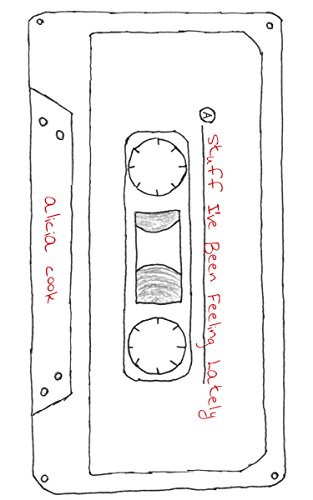
Alicia Cook is an established writer and award-winning activist from New Jersey. She holds a BA in English and an MBA. She currently works full-time as Director of Institutional Communications and Campaign Marketing at Bloomfield College. She is the best-selling author of "Stuff I've Been Feeling Lately", a free verse and erasure poetry collection through Andrews McMeel Publishing and a 2016 Goodreads Choice Awards nominee. Her activism against the heroin epidemic has been recorded in the Emmy-nominated PBS documentary series, "Here's the Story" and was featured in the Golden Door Int'l Film Festival.
Get Connected!
Interview with Thom Young, Poet & Novelist
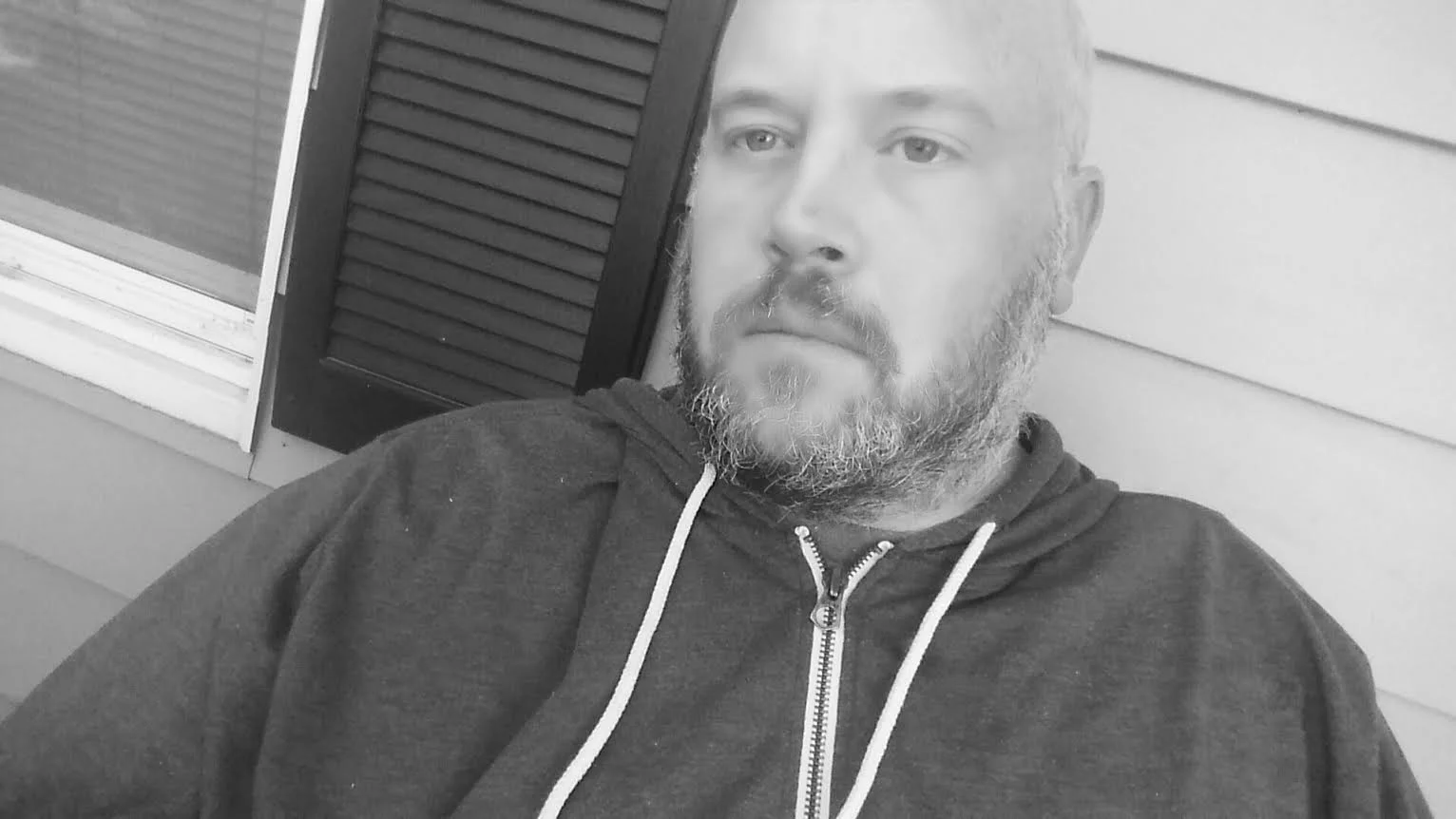
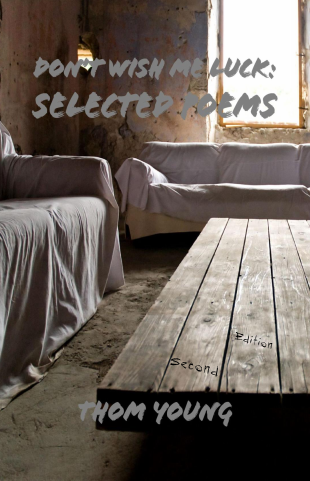
Thom Young is a writer from Texas. His works, both prose and poetry,
have been previously published in The Commonline Journal, 3:AM Magazine,
Red Flag Poetry, Word Riot, 48th Street Press, and more. Deriving his work
through a satirical filter and concise imagery, A Little Black Dress Called
Madness series has reached #1 on numerous Amazon Best Seller lists.
Awards include: 2008 Million Writers Award nominee, 2016 Pushcart
Prize nominee
Get Connected!
Click Here to Purchase

Follow Thom on Instagram, Twitter, and read the PBS Newshour article here
Interview with Ryan Hennessy, Poet & Novelist

Ryan Hennessy is a United States Navy veteran originally from NYC. A writer, not a dreamer. A straight shooter, sometime deep thinker. He has a penchant for whiskey, metal music, laughter, not shaving, bickering over politics, and Brooklyn pizza. No flowery verse and romanticism will be found here, but you will find glimpses of love, pain, and anger.
Get Connected!


Interview with B. Dani West, TW editor and author of HEAD
Enjoy this bonus episode of The Weekly Degree where Josh and B. answer your questions and talk about HEAD. Literary meets laughs!

Wondering what goes on in her HEAD? Some limited edition and many standards available!
Interview with Damian Rucci, Spoken Word Poet and Author

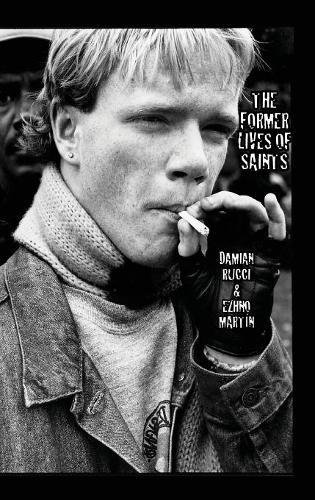
Damian Rucci is a long time Keyport, NJ resident and founder-host of Poetry in the Port reading series. He is the author of 'Tweet and Other Poems' (2016 Maverick Duck Press) and co-author of 'The Former Lives of Saints' ( 2017 EMP) and has participated in various readings and slams on the East Coast and the 2017 KC Poetry Throwdown. He is also an editor for The Blue Mountain Review.
Get Connected!
Interview with Erin Anastasia, Spoken Word Poet

Erin Anastasia is a spoken word poet from New Jersey. She holds a BA in English from Montclair State University and is pursuing a career in publishing. Her Youtube channel, bearing her own name, features her readings, interviews, vlogs, and performances of her peers. She is preparing for the National Poetry Slam in Denver, Colorado which begins tomorrow, so wish her team the best of luck! Listen in to Josh's interview below!
Transcript courtesy of Erin Anastasia
Get Connected!

Check out her Youtube channel and Instagram:
@erinanastasiapoet
Lawrence Black: How We Got Here: The Evolution of the Storyteller, from Artist to Entertainer
When poet and Thirty West founder, Josh Dale, invited me to contribute to The Weekly Degree, my immediate thought was to write about art as I see it: how I feel about it, my thoughts, as a writer, about the world that consumes me (and probably many persons reading this). This 'art world' I refer to isn't any special world. It's the same world you live in. Perhaps we consume different art than our neighbors, but we nonetheless all patronize the arts. I don't give a shit if you're watching King of Queens or reading The Holy Bible, these are both considered art. I'm not here to debate what it [art] is. I'm here to talk about what happened between Moses and Kevin James—not because I was an English major or a historian (I'm neither), but I am a writer, which is to say, I am a reader, a sponge, and an ameba. I feed off art. And in my years of reading and feeding, of consuming literature, film, television, and internet, I've come to understand something about how we've come from Moses to Kevin James, which is to say nothing of morality and everything to art. Art may seem to be one vast cultural spawn, but it has changed; society has changed, and, with it, the purpose of art has evolved.
Using the Bible as a genesis point for modern literature, we naturally must understand that it was a book written during a period when they crucified people. Naturally, the literary establishment consisted of the state, meaning: if what you wrote pissed the wrong people off, they would nail you to a cross. Understandably, it took 500 years until the first book resembling a novel—The Tale of Genji—was written, in early 11th century Japan by Murasaki Shikibu. Still, it would be another five-hundred years—in the early 16th century—before a Spaniard named Miguel Cervantes would write Don Quixote (largely considered the first novel).
It took a thousand years to get from the Old Testament to Don Quixote. Why so slow? Well, we must understand what art was at that time, yet another five hundred more than five hundred years ago from our present time. To do that, we look to the words of the Bard of Avon, William Shakespeare (1564-1616):
Suit the action to the word, the word to the action, with this
special observance, that you o'erstep not the modesty of nature:
for any thing so o'erdone is from the purpose of playing, whose
end, both at the first and now, was and is, to hold as 'twere the
mirror up to nature: to show virtue her feature, scorn her own
image, and the very age and body of the time his form and
pressure.
—Hamlet advising his Players, in Act III
What Hamlet is telling these actors is that overstepping the boundaries of nature (modesty) in their acting, is contrary to the purpose of playing (acting), "...whose
end, both at the first and now, was and is, to hold as 'twere the
mirror up to nature: to show virtue her feature, scorn her own
image, and the very age and body of the time his form and
pressure."
Shakespeare is saying the purpose of art, "both at the first and the now," is to hold a mirror to nature, as Hamlet declares in Act 2: "The play's the thing. Wherein I'll catch the conscience of the King." Perhaps Shakespeare was in the business of catching consciences, (It might be argued the Bible did the ultimate job of that), however, whatever moral duty was felt, Shakespeare lived in a time when art still served the primary function of being a teacher for people, and Shakespeare's work continues to help people understand life to this day. That's the timelessness of Shakespeare: his characters walk among us. Of course, Shakespeare still doesn't bring us all the way to King of Queens; we've still got another 500 years to go.
But, pausing here briefly, we have established that art and stories originally served a very pedantic, albeit entertaining, purpose: they were meant to teach us things. We must remember that humans, long before we ever wrote, developed oral traditions (storytelling) as a means of passing on knowledge from one generation to the next. However, it was the book that changed the game with permanence. But also, with that permanence, with human curation, came an inevitable evolution; art would change. It wouldn't always be the teacher.
By the 18th century, European writers had enough freedom to pursue their own individual values in their work, which led to a creativity not yet seen before. Romanticism was born, which emphasized emotion and individuality in art—and then, in the 19th century, Aestheticism; the idea of art for art's sake. Both movements allowed artists to explore life in richer and more textured ways, but we still must keep in mind that the last 200 years were not as liberal, meaning, artists, storytellers—particularly if they wanted to be successful—had nothing like the freedom we do today. Although, by the 20th century, societal standards were loosening, and we would have, in 1955, Vladimir Nabokov’s Lolita (GASP!). In 1961, Henry Miller's Tropic of Cancer (GASP!). And, in 1969, Phillip Roth's Portnoy's Complaint (GASP!). All very salacious books at the time they were published as all three were subsequently banned and protested (others too, but for sake of argument).
This level of censorship in the West is, of course, an almost impossible idea to imagine in the age of the internet, at a time when A&E is airing a show called Live PD, which has been hailed as "the most disturbing show on television". While I can't call that show "art", as it is live reality TV; it's indicative of the level of cultural acceptance we have given to previously un-broadcast-able material. You can write anything today, and, in almost the first time in history, the gatekeepers of Church, State, and Enterprise no longer remain in control; art is in the hands of the masses. However, it isn't creative freedom or moral freedom that drives art today, it's revenue. Eyeballs aggregate money and those eyeballs have a very big appetite. Art, today, exists —for the first time ever—largely to entertain. There's a reason they call it, "the entertainment business".
But what of all this seemingly pedantic discussion? What is the impact for the artist?
Well, I didn't write this so much to focus on the artist as much as I did to talk about the artist's impact on society, and the evolution of the artist's role in impacting society. To paraphrase John Gardner, in his 1978 tour de force, On Moral Fiction, 'Good art should seek to enhance life rather than debase it'. As Gardner writes, "There's not a lack of great, serious fiction because of the ills of society, but, rather, the ills of society are due in part because there is a lack of great, serious fiction." He is saying that art and life are intertwined and that one influences the other. To ignore the idea that art influences and reflects values, is to fail to understand the culture.
Today, we have a White House that imitates the skullduggery on Netflix's House of Cards: our President is literally a reality TV star, and while you may think this excellent, most artists and writers do not. We are by far, a liberal, humanistic bunch. And maybe all the hacks really do go to Hollywood, but I think it's deeper than that. I think we writers have forgotten that we were once stewards of knowledge, shepherds of culture, and makers of mirrors. Today, we think only of entertaining. But when will we think of meaning again? I don't know, but I know the world could use a good dose of it.
P.S. I wish I could say that poets, unlike writers and filmmakers, have yet to turn cheap tricks to entertain, but with the rise of the "insta-poet", this is no longer true.
P.P.S. It is, sadly, growing increasingly difficult to land a book deal without a following, and increasingly easy to land a book deal with one. With that said, perhaps the artists aren't to blame at all.
So, how did we get to King of Queens?
The people voted.
Give them somhttps://www.instagram.com/wolfwaldoblack/ething better to vote for.
Lawrence Black currently lives in the mountains outside of LA, where he is writing his first novel. He has kept a blog for the past eight years on 7saturdays.wordpress.com and he is on Instagram @wolfwaldoblack
Scott Laudati: Fishing on Gilpin Point

There’s no quiet.
There’s no quiet anywhere in the world. You try and write in the City. Why not? It’s New York. Everyone’s written in New York.
But getting started is always tough. Take a walk on Wall Street. Most trains will dump you off down there. It’s the oldest part of Manhattan. There’re still ricochet holes in the J.P. Morgan building from the old days when people had voices and an anarchist tried blowing it up. Cross Canal. Nothing good there. The City really cracked down and the Chinese don’t sell those little green turtles anymore. Head into a Village. Rats the size of Basset Hounds talk in code and work together to get a garbage bag across 6th Avenue into Father Demco Square. North of that it’s all shit. Midtown. Assholes from New Jersey who want pubs because 11 generations ago someone came from Ireland and a pint of Guinness keeps that spirit alive. Actresses from Wisconsin found a roommate on Craigslist and they pile out of the Port Authority. A generation ago they would’ve been giving blow jobs in the bathroom. The pimps used to call it The Minnesota Mile. Now they wait tables and practice country accents on a cold stage in Queens. Central Park looks wild but apparently, every rock and bush was meticulously planned in a board meeting. The south end is like hospice for the carriage horses. They drop to the asphalt and heat stroke before the eyes of fat newlyweds. “Help him. Do something!” They yell at the Coachman, some scared immigrant like it’s his fault their high-fructose flab just murdered a horse. The north end is another country. Dominican families fish in the lake for something to eat. The filth is so thick turtles try and break through for the bait but their little arms can’t penetrate. Then it’s churches. Fried fish. Corner boys. I pass Paris Blues but the one time I went in they charged me $7 for a Budweiser. I pass Hamilton’s house right on the border of Harlem and the Heights. And then I’m home. Ready to write? Yea, right.
There’s no quiet.
I make tea. I take the Snake Plant from the window and put it on my writing desk. Maybe it will expel something that clears my head. Did you know you’re supposed to re-pot plants when you bring them home from the store? My grandfather was the head of the Brooklyn Botanic Garden. He said if your plant was turning brown re-pot it with new dirt. He also said if that wasn’t working put it in the bathroom. I tried it once in college. After a week in a four-man bathroom, that plant glowed like it was taken from the green grass of Eden.
But there’s no quiet.
Something starts to happen. I remember a feeling that took me once when love began to act like it was supposed to. When the chords matched the feelings and it was all going to be ok. Then a fire truck wails and it’s gone. I bite my lip while I watch cars dodge the firetruck and an ambulance follows, with its own siren. The feeling comes back. Then the pit-bull gets loose. Then the guy who lives on my stoop starts yelling about white people. It’s hopeless. There’s no quiet.
I give up. Watch John Oliver. Watch VICE. Get pissed. The world sucks and VICE sucks. I guess I pass out but I wake up to more car horns and I feel like I haven’t slept at all. Then I remember my grandfather, the botanist, is dead, but we still own his house and it’s my favorite place in the world. It’s my favorite place because it’s 2 acres in Maryland right on the Choptank River. And the river is where I spent my youth. And the river is full of blue crabs. And the fish jump even when it’s 3 p.m. and it’s 90 degrees. And there are turtles who paddle so slowly against the current their arms wave at you as they float by. And it’s my favorite place because it’s quiet.
Can I write there? Oh yea.
Take the early train out of Penn Station. My mom picks me up and since I mowed the lawn last time I was home she lets me use her car. Drive south through New Jersey. A clear day and to my right even Philadelphia looks good. Take the Delaware Memorial Bridge over the river where the fresh water currents mix with the salt from the bay. And then I’m on the Eastern Shore. The flat lands where my mother was born and my lineage put roots down when they landed on this American dirt, leaving the highlands of Argyll sometime in the early 1600’s.
It’s the right place for the end of the world. It’s the land of Trump people but I can’t fault them. They vote like idiots but they’re genuine. They are the America we pretend we aren’t from. My grandfather’s house has been vacant for a year. The neighbors keep an eye on it. They mow the lawn. They clean the sparrow nests out from the porch. They get insulted when you offer them compensation. You think Clinton people would do that?
I stop at the bait store when the corn fields end. It’s hot. It feels like somebody microwaved a wet blanket and wrapped me in it. I’m in Easton, Maryland so I don’t lock the car and I walk inside. Between the fishing poles and the archery is every shotgun ever made. Have you ever looked at a rack of guns and not wanted one? I haven’t. I brought my gun permit. But even with all that excess firepower and the 2nd Amendment, I can’t find anything in my budget. I remember that the first question I had to answer to get my gun permit was, “Have you ever been part of a Communist organization?” It was the first time I “officially” lied. It felt very good to beat the government at its own game.
“You wanna hold sumthin?” the kid asks.
He’s young but he looks just like the old guy counting money. Maybe this place is a summer job. Maybe his inheritance.
“I need a peeler”, I say, “it’s the only bait that works.”
“I only got stills.”
“What’s the difference?”
“Nothing. Just means they died today.”
The kid rings me up. $1 for a decent sized peeler crab. I’m going to be eating fresh catfish for dinner. I can already taste it.
A peeler is a crab that has shed its old shell. For 24 hours, it’s defenseless. Its skin is soft and thin. Then, by the next night, its shell has returned, rock hard. If you catch a crab in this peeler state, you can use it for fish bait. The fish go insane for the soft pieces of meat. It’s like hunting with a machine gun.
A single lane road goes the 28 miles from Easton to my grandfather’s. The road bends along the low marsh lands. It’s high tide and in the cattails, I can see Oriels and Red Winged Black Birds. I drive over the drawbridge and the keeper in the lawn chair sleeps like a mannequin. Then it’s a left on Hog Creek. A right on Pealiquor road. And through small towns with peach stands and little girls selling corn from the family farm. Priests spend whole Sundays out here taking river boats town to town to deliver homilies. Nothing changes. Time doesn’t pass.
My grandfather was a botanist, not a landscaper. Some of us dig this. Some don’t. The house has been on the market now for a year, and no one is interested. Vines have overtaken the yard. Things that have names never translated from Japanese have conquered the gravel driveway. I park under holly trees that smell like my childhood. It’s a distinct smell that you would know immediately if your young feet have ever tried to walk over their dead leaves. There are big spiders and black snakes everywhere. It’s a nightmare for city people. For people like me.
About an hour before sunset I throw my first line out. I’d found my grandfather’s old marine knife in the shop and used it to cut up the crab. The sun is still high even though the day is growing late. The fish jump. One after another. In a nest a bit further down the river, two Osprey’s feed their young and make a call like dripping water as I walk out on my grandfather’s dock.
I hang my feet over the wood and they sit about two inches under the water line. A snake or a turtle swim by, a head like a tree branch studies me and then disappears. This could be the last time I’m here, and even though I always dwell on finality, I never feel like I’ve made the most of anything.
I was just in LA for six months. I can’t remember why I even moved out west. I never wrote there either. It was quiet, but something else was off. The vibe out there was all wrong. I walked the Sunset Strip every day, past the In-N-Out Burger. Past the Guitar Center and the Comedy Store. Sometimes I’d go all the way to Beverly Hills. Or the other way. All the way down Hollywood to Vine. To The Frolic Room. One of the last real bars. And on any given day I might share a beer with Johnny Depp or the homeless guy with no shoes who smelled like boiled piss.
LA was a pointless detour. The only thing I ever did worth a mention was win the Thirty West broadside competition. A big envelope arrived at my door on the anniversary of my second month with 20 broadsides. It was a poem called The Wooly Mammoth and I could read it weeks later and still think the words were good. It was about the girl I always write about. The one I went crazy with. The one who ruined my life that I still laugh with sometimes when we see each other outside of Wawa.
I went to Ralph's for a sack of flour. Then, I went to the hardware store and picked up a paint brush. I walked home and bought a burrito on my way. I had the apartment all to myself. I could make wheat paste on the stove and make a mess. My roommate had a heart attack my 2nd week in California and was holed up in a hospital in West Hollywood. He had a way of giving bad advice about everything. He’d certainly have an opinion on graffiti.
I poured flour and water together in the pot I used to make pasta. It became a thick broth. Like milk. I put my broadsides into a backpack. I dug around outside for a bucket but I couldn’t find one. I gave up and just took the pasta pot full of wheat-paste with me out into the night.
I lived on Tranny corner. The same one Eddy Murphy had been picked up on. There were prostitutes everywhere and they just shit on the sidewalk. The cops never bothered them, which is cool, but it’s also gross when you see piles of human shit everywhere. And human shit doesn’t look like dogs. And whatever diet a transvestite prostitute is on makes it smell considerably worse.
I walked up La Brea and made a right on Hollywood Blvd. LA is an ugly scene during the day, but at night it’s sinister. Anyone with $50 and a dream can land here. The sidewalks are lined with tents. Crazies eat their hair. Gutter punks strum 4-string acoustics. Little kids run down the street and kick homeless women for fun. Unchained pit-bulls take shots from their owners but they don’t leave, and sad moans that can only come from mammal souls drown out the Scientologists trying to beckon the weakest members of every party walking by.
It’s a real horror. LA is the worst place I’ve ever been.
I dropped my pot full of wheat-paste just next to The Roosevelt. I dipped the paintbrush in and then slopped the goo across my broadside. I did a few in a row. They looked good. Like street art companies pay for. But the cops will still arrest you, so I moved on. I did this same hustle, in collections of 3’s, all the way down Hollywood Blvd. I saw the faces of those that had come before me. Passion and hope led them here. Cooked into these streets. Nameless. Worthless. I stepped over them while I hung my art. I saw the price this city demanded from its servants. I chiseled a brief mark into Los Angeles, but I didn’t have enough of my soul left to pay the bounty. So, I fled. And it was like I’d never even gone at all.
And now I’m back. On this river of my youth. I pull in a catfish. It’s big. Bigger than my forearm. The peeler worked.
I carry the fish, my hand suppressing its fins, to a wooden board. I give the fish my hardest swing with the hammer and it’s dead. The thick green hues of the catfish’s skin instantly dull brown. Then I put a nail through its skull to keep it locked onto the board. The knife is dull but I saw off the fins and tail. It will be a good meal.
The last time I caught a fish here I cooked it the same. Two big fillets. Fried on a cast iron skillet in coconut oil with some vegetables and rice. I had split the fish evenly between myself, my dog and my grandfather. He died last January. My dog tapped out in October. I learned a lot from both. They were very good at things they were supposed to be good at.
I look out at the river as the sun sets behind the far trees. Just over that marsh is the mainland, and then all of America is in front of me. I sit back and think about these words now, and wonder if they mean something.
I quit smoking here two years ago,
My grandfather and I used to row around looking for turtles.
This is where my dog first swam.
I can finally think.
It is quiet.
Scott Laudati is a poet and journalist from the northeast. He has been published in various journals, along with a 2x 48th Street Press broadside recipient and Thirty West broadside contest. He is the author of the poetry collection, Hawaiian Shirts In The Electric Chair, and the novel, Play the Devil, both through KUBOA press. Visit him on Instagram: @scottlaudati
Compass North: An Int'l Interview Series: Sarah Spinazzola
J: What interview can’t start without an introduction?
S: Ok, let's start by saying that I speak little English (but I've been studying for 8 years). Now some information about me: I love olives. I'm afraid of insects. I like sunsets. I have never eaten a shrimp. For a time, we had a monkey called Cristina in the house. I once found a silver bracelet in the snow. If you write me a letter and start with "Dear Sara" (without an ‘h’ at the end) I'll misspell your name back (laughs). At breakfast, I drink a banana smoothie using a colored straw. I love colored straws. Lastly, I was in the World Trade Center in the past.
J: I like your factoids and how you just lay them all out on the line. Also, your English is good…I don’t think you give yourself enough credit! I am curious to know what your surname stems from?
S: My last name is the name of a small country in Southern Italy. In this country called Spinazzola, there is also a castle, and when I was little I thought that one day it would be mine.
J: That is interesting that within Italy, there are separate states. If you so happen to ‘inherit’ this castle, I want a tour! Anyways, when did you start writing and what made you passionate at first? Now?
S: I started writing after reading The Diary of Anne Frank in elementary school. Immediately after completion, my mom gave me a secret diary on which I started to write talking to an imaginary character named Frenk (yes with an ‘e’) that always means Frank, but I wrote it how it is spoken in Italian.
I finished high school and went off to college. After the first year of studies, I departed from my philosophy studies and I started to attend libraries (they are much more interesting places). I started to write within. I was interested in the beginning of what an Ego thought, a narrative voice to the first singular person, who had thoughts and emotions. I was interested in revealing the emotions and thoughts of the protagonist. Now I am interested in writing tales of insects.
J: I’m sure there are plenty of oddities within the mind of an insect (laughs). That’s quite an interesting take, thank you for that. So, tell me more about Marcos Y Marcos. How was the publishing process for you?
S: Marcos y Marcos is an independent publishing house. They published my debut, adult-oriented novel, My gift you are . A quick backstory: In the first version, the book was read by a famous Italian writer named Paolo Nori. It was he who proposed my book to Marcos y Marcos and they later agreed to publish it. In another interview, I told that the work with the editor Claudia Tarolo lasting nine months, and it was almost like giving birth: long and necessary.
J: ‘Like giving birth: long and necessary’…wow! The coincidence of the process must’ve have been so surreal once your ‘baby’ was born. Has it been challenging finding an audience outside of Italy? Does your fan base support you well?
S: You are my first supporter and I think you're doing it right.
J: I’m flattered! I don’t know Italian but I can surely endorse you. What other hobbies do you have?
S: I like to paint. As a child, I wanted to become a painter. Then after reading the books of an Indian man, Osho, I wanted to get to the lighting. I did not succeed. Now I like reading fairy tales aloud to children, and just since July 8, I and two other people will read fairy tales to children. We will be in the beautiful library park of Legnano.
J: I tried my hand at pencil drawing as a teenager, but found little success. As far as the reading, I want to know how it went! Here’s a metaphysical question for you…If you could name a material that could describe you, what would that be? This can be anything from fabric to wood, stone, leafy/natural, etc.
S: I think the material that can describe me is glass.
J: Hmm. There is the fragility of glass, and the opalescence and pristine craftsmanship that comes with it. Very nice! So, where in Italy is your favorite? I am dying to visit but would like to know all the "hotspots".
S: I have not explored all of Italy, certainly the most important cities, yes. One of my favorite places is a region called Emilia-Romagna. Compared to other places, people are kind and cheerful (there they make also Parmesan cheese. Just to say one thing). Then there is Rome, Venice, Florence, Naples which is worth seeing. You are spoiled for choice.
J: Understandable. It can be difficult to get up and move to another state here, so I can see how it translate to you. Ok, last one! Do you plan on visiting the US? If so, will I have the honor to receive a copy?
S: I have an uncle who lives in America, near Rhode Island, and I've been to see him once. When I come back, I will surely give you a copy of My gift you are. But who knows, maybe someday someone will decide to translate it into English so you can read it from start to finish and tell me what you think? Promise?
J: Promise. Thank you for the chat, Sarah! Below is the link to her publishing profile from Marcos y Marcos which has an English translation on-board!