

Irene Clementina: I teach my children superstitions: Photos


Synopsis
I teach my children superstitions is a fairy tale about two individuals, two friends, two lovers running away, protected by their own made-up rituals. The freedom of not belonging to anything nor to anyone when your heart is fulfilled with liberty.
Credits
Photo: Irene Clementina
Runaways (models): Kristin Hood and Yuya.
All clothes, special vintage archive: Heritage&Rare www.heritageandrare.com
Location: Brooklyn, NY.
Irene de la Selva is an artist and photographer based in NYC that explores folklore through artistic expressions and fashion. She works in both with analog and digital formats at ireneclementina.com
Darryl Graff: Fresh Flowers
Every Saturday I go to the florist on 116th Street in Rockaway and buy five stems of white daisies. The florist is an old Jewish guy from Far Rockaway, who wears gold wire-rimmed glasses. He always proudly tells me that he is “hung over.”
“The price of being popular,” he likes to say.
I say to him, “Five daisies, no fruit,” which means, no baby’s breath or greens. This makes him laugh.
When I was a kid, my father would take me downtown to restaurants with red-and-white checked tablecloths. I guess he figured, taking his young son to a restaurant to drink was better than going to a bar where I would have to sit on the bar stool with my little Converse feet dangling in the air. At the restaurants, I got to sit in a regular chair with my feet on the floor, and have a small plate of salami with a Coke.
My father’s order was always the same: “a martini straight up, no fruit.” The waiter would nod and say, “Yes, sir.” When my father said, “no fruit,” he meant, no olives or lemons, liquor only. When I tell the florist, “no fruit,” he knows exactly what I’m saying– and where I’m from.
Most times when I’m at his store, the florist is busy, blowing up balloons with a helium tank. Balloons that say something like “Congratulations to the Grad,” or “Happy Easter,” or “It’s a Boy.” He always has a pack of Pall Mall cigarettes lying on the table next to his pruning shears. I have been trying to quit smoking cigarettes for five years.
Once I asked the florist, “What does your doctor say about the unfiltered cigarettes?”
He calmly replied, “My doctor told me to quit smoking, or I’m gonna die.”
I said, “So, what happened?”
“My doctor died,” he said with a big smile.
The florist is my hero.
I give him five dollars, and leave the shop with the flowers. Then I walk down 116th Street to the Rockaway Park Deli and Grocery. The guy behind the counter is from Yemen. His name is probably Abdul or Akmed, but here in America in Rockaway Park, we call him “Mike.”
The store is full of Budweiser 12- packs stacked five feet high. It’s an alcoholic’s maze. I work my way through the maze-like a laboratory mouse until I make it to the back of the store where the cold twelve-packs are.
Rockaway has been a dumping ground for all of New York City’s mentally ill for fifty years. Any other neighborhood would have one or two homes for the mentally ill; Rockaway has at least thirty or forty. There is an oversaturation of half-way houses, too, all filled with slack-jawed overly medicated zombies. Not just regular zombies, Diane Arbus zombies. All smoking generic cigarettes because New York’s Mayor Bloomberg has decided that all smokers should be taxed, even the crazy ones.
One day at the Deli, I said to Mike, “I really hope you have been to other parts of America. I would hate for you to go home to Yemen, thinking that Rockaway Park is America….”
My wife, Regina, and I live in Chinatown in Manhattan and come out to Rockaway only on the weekends. Even though we are not Chinese, “Mike” likes to call us “Mr. and Mrs. Chinese people.” If Regina is not with me in his store, he greets me with: “How is the Chinese Lady doing?”
And Mike assured me, “Don’t worry, I’ve seen America. I’ve been to the Liberty Bell in Philadelphia and Niagara Falls, upstate.”
I think to myself, Allah is great, God is good, thank Jesus for the Liberty Bell and Niagara Falls. Otherwise, someday, when Mike returns to Yemen, the children in the village will gather around him and ask Uncle Abdul, “What is America like?”
Mike will tell them, “It’s all slacked-jawed, overly medicated, generic-cigarette-chain-smoking zombies. And then there is “Mr. and Mrs. Chinese people, who buy Budweiser beer and the pro-Israeli New York Post every day. Children, always remember, America is a very, very bad place…”
When I get home, I give the flowers to my wife, Regina. She clips, and snips, and even talks to the flowers. She says, “You’re so beautiful, yes, you are,” as she arranges the flowers in our thrift-store vase and places it on our yard-sale table.
Darryl Graff is an NYC construction worker my stories have appeared in Akashic books, Gravel, Empty Sink, and other journals.
Walt Whitman: Song of Myself reading
The Weekly Degree ends May and enters June with a reading of one of our favorite poets. So what better time to praise his work with a poetry reading? Listen & watch the video below (read by Tom O'Bedlam).
As seen on poets.org
Walt Whitman was born on May 31, 1819, the second son of Walter Whitman, a housebuilder, and Louisa Van Velsor. In 1855, Whitman took out a copyright on the first edition of Leaves of Grass, which consisted of twelve untitled poems and a preface. He published the volume himself, and sent a copy to Emerson in July of 1855. Whitman released a second edition of the book in 1856, containing thirty-three poems, a letter from Emerson praising the first edition, and a long open letter by Whitman in response. During his lifetime, Whitman continued to refine the volume, publishing several more editions of the book. Noted Whitman scholar, M. Jimmie Killingsworth writes that “the ‘merge,' as Whitman conceived it, is the tendency of the individual self to overcome moral, psychological, and political boundaries. Thematically and poetically, the notion dominates the three major poems of 1855: ‘I Sing the Body Electric,' ‘The Sleepers,' and ‘Song of Myself,' all of which were ‘merged’ in the first edition under the single title Leaves of Grass but were demarcated by clear breaks in the text and the repetition of the title.”
The first two sections of Walt Whitman's seminal poem. Whitman sees himself in everything and everything in himself becoming what he observes, the "kosmos".
Nick Sweeney: No Ball Games-Photos
We are pleased to run yet another photo gallery for you all on this week's The Weekly Degree. Below are 10 photos on the theme of "restriction".
Abstract: Some of us travel to find things to amuse and entertain us. They're very often the same things we'd do at home, so why don't we just stay at home and do them? The prompt for this series of photos came with the idea that if you'd traveled to do these very things in these places, you'd be terribly disappointed. Why not travel in future in search of things to NOT do?


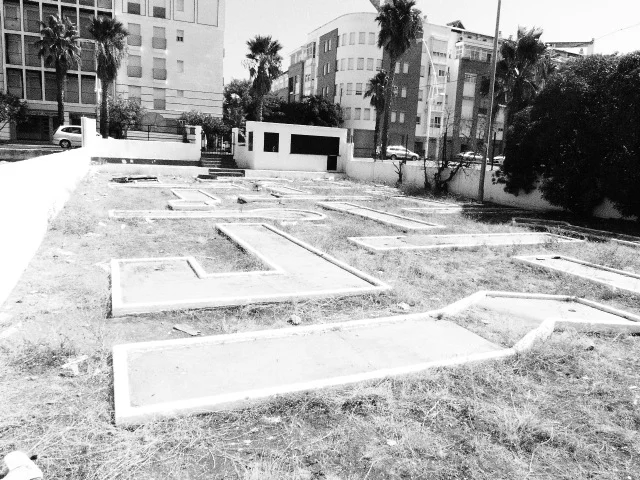


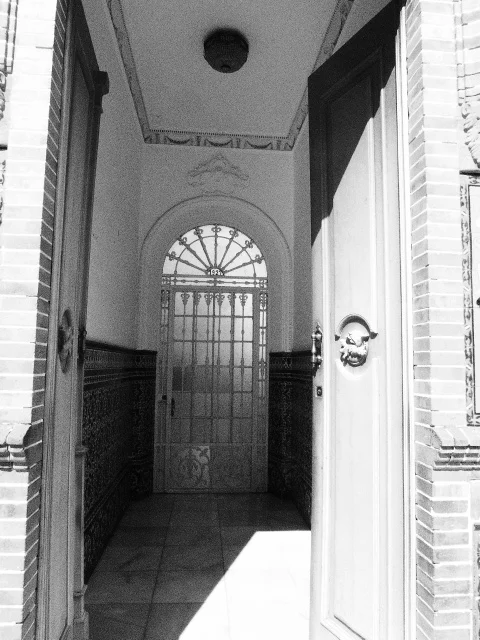
Nick Sweeney’s stories and photos are scattered around the web and in print. Laikonik Express, his novel about friendship, Poland, vodka, snow and getting the train for the hell of it, was published by UK independent publisher Unthank Books in 2011. He is a freelance writer and musician, and lives in London.
The Poet M.J.: Spoken word
Today on The Weekly Degree we have an audible treat for you all. Indulge in this marvelous spoken word piece by The Poet MJ! Click the play button to hear it.
Melinda Jane, a.k.a. The Poet Mj, is a writer and spoken word artist with explorations in soundscapes, installation art, improv music in the performing arts. She has poems published in The Mozzie, Rambutan Literary, Backstory Journal, KNWG and Border Watch as well as a children's book, "The Currawong and the Owl". A lyricist collaborating with composers and musicians in spoken word performances and a musical concert, she was a fellow of the Australian Writers National Literary Awards in 2016 for the play script titled, "The Farmer’s Wife".
Interview with poet, Kimberly Casey
I visited Huntsville, AL in February for Thirty West Presents. Aside from the space and rocket museum, trendy eateries, libations, and relaxing weather, there is a thriving community of artists that I was anxious to indulge in. Below, I was able to interview an awesome human and her contribution to this community...
J: Welcome, Kimberly, to The Weekly Degree! It’s been awhile since I did an interview. For starters, tell us a bit about yourself.
K: Kimberly Casey, poet, community organizer, dog lover. I’ve been writing poetry since 6th grade and have been performing it in some capacity for a decade. I founded Out Loud HSV in 2014, in an effort to provide a place to inspire community outreach and activism through spoken word.
J: So, I know you graduated from Emerson College…are you originally from the New England area?
K: I am originally from Massachusetts, a really sweet small town called Brimfield.
J: On the note of Out Loud HSV, what compelled you to travel to the Huntsville area and set up such an organization?
K: I had some amazing friends with a studio at Lowe Mill ARTS & Entertainment, and I had just graduated college and was in a dead-end office job. They invited me down to visit them and within two weeks I had a job at Lowe Mill. Once I settled in Huntsville permanently, I sought out a community of writers. When I didn’t find anything that stuck, I created a monthly open mic series which flourished over time into Out Loud HSV. Now we have a studio, poetry slams, workshops, youth meetups, storytelling events, and of course our monthly open mic series is still alive and well.
J: I was able to check out Lowe Mill and was blown away upon arrival. How does the community in Huntsville approach literature? What/who are major figures in your community?
K: Huntsville is a huge city but it’s sprawling, so there are a lot of small pockets of literary lovers throughout. Oakwood University and A&M have great spoken word groups, our local NPR affiliate showcases local writers on the Sundial Writers Corner, there’s the Huntsville Literary Association and more. As far as a major figure in our community, my biggest local literary inspiration is my friend TC, who is the founder of Coffeehouse Poets. TC is constantly working to use the power of poetry to give back to the community in majorly impactful ways. I really admire that.
J: It is quite a beautiful place and hearing about NPR and the universities give it even more value. What type of publications does Out Loud normally put out?
K: We put out a yearly anthology that welcomes submissions from everyone who has read at our events that past year. Everyone who submits gets at least one piece in, so it functions as a yearbook celebrating all our communities amazing voices. We’ve done a few zines, and I hope to expand more for the publications in the future.
J: Sweet! How has Lowe Mill fostered community in Huntsville as a whole?
K: Lowe Mill has been a staple in Huntsville from the start. The Flying Monkey Arts collective was the first official tenant of the building, bringing a weekly artist market and eventually building out studio spaces before the building had heat or AC. The Flying Monkey was and is dedicated to providing a space for the community to access art. Lowe Mill grew and grew to house more and more artists, and now is the largest privately-owned arts facility in the country. It’s an amazing space where the public can come and not just see the art of all different mediums but meet the artists and learn more about their processes—there’s an open-door policy so if you see a studio door open, head on in and meet an artist!
J: Even more of a reason to visit and re-visit! How did you like your experience with Tilde and Thirty West when I hosted the reading? Would you consider stocking Tilde print journals at Lowe Mill?
K: Amazing and absolutely! Our studio stocks many local pubs and self-published authors who have been part of our community in some way, and since your visit, you’re part of our community now! Print journals, Thirty West books, let's work that out! The reading was a blast. I love hearing new voices in new spaces, and we’d never done an event in that venue before. It was great.
J: Totally was and maybe it’ll happen again one day. What are some of your short and long-term goals as a creative staple in Huntsville?
K: We just accomplished a huge goal this year by getting our official non-profit status. More goals include more work within our local school systems & with youth programs such as the Boys & Girls club, all while continuing to provide a wide array of literary outlets to our city. Bringing in more and more touring poets and writers is an ongoing goal, as is working towards sending our yearly slam team to more and more competitions both regionally and nationally. We’ve got a strong structure and foundation, now we just keep building on it.
J: Love that reference. Lastly, what’s your favorite coffee drink at Alchemy?
K: An Iced Americano. No nonsense; just give me all the caffeine!
J: Tasty and effective. Thanks again for the interview! You can read Kimberly’s work in Tilde or check out some of the links below. See you next week on The Weekly Degree!
Lowe Mill ARTS and Entertainment
Bob Raymonda: Rice Bowl, Half Empty
As soon as I walk in the door of my apartment, I strip down to a pair of shorts and open the fridge to compose dinner. A brick of tofu, a can of black beans, a few cups of white rice, half an onion, and an orange pepper materialize before I can decide what to do with them. Improvising, I dice each individual part into more manageable chunks. When this is done, I drop them into two separate pans with a few tablespoons of olive oil.
“Are you sure you weren’t supposed to put the rice in the water after it was already boiling?” chides Sam from the peanut gallery, cuddling with our cat in the living room.
“Yes,” I groan, exasperated with her constant lack of trust in my ability to follow directions. She checks the box to make sure anyway.
I employ unmeasured splashes of pink sea salt, black pepper, cumin, and paprika to lather the frying tofu. I use our long set of tongs, flipping the thin steaks in the splattering pan repeatedly, willing them to cook faster than they’re able to. Sam sings a stream of consciousness tune about vegetables to our cat, who has joined us on the countertop. Dutifully, she seasons and stirs the onion, pepper, and beans to ensure even cooking. I wash the cutting board so the inevitable pile of dishes in the sink is smaller, later.
When the meal is finally complete, Sam combines a heaping dollop of mayonnaise with a smaller squirt of sriracha. We squeeze half a lime over our evenly portioned bowls and I throw the remains of it into my glass. I’ve gotten good about resisting the urge to buy sugared juices, but I still want to transform the water I chug instead into something that is more than.
Before we get to the living room, on our respective sides of the brown suede couch, I’m already shoving forkfuls of food into my mouth. I do this not to test out if the rice is cooked, or if I used too much seasoning, but to fight off the hunger that’s been burbling underneath since I strapped my seatbelt on in the car an hour earlier. The time I’m forced to wait in between meals fosters an impatience in me that I have little ability to deal with.
I do not savor a single bite. I do not pay attention to its flavor as another episode of Parks & Recreation plays, but inhale my food as if I’ll never have another meal again. Leslie Knope can barely get through an entire joke by the time that I’m finished and letting out a deeply satisfied burp. The immediate inaction of completion starts to eat away at me, and I quickly, subconsciously, choose from a myriad of past failures to obsess over. Any reason that I can find to hate myself more than I already do.
“Mmm, this is good, baby,” Sam says, only halfway done. I plop my empty bowl onto the old black trunk in front of us that serves as a makeshift coffee table. I don’t even wait five minutes to register if dinner was satisfying before I start thinking about my next offering. My stomach, bloating with its still digesting meal, screams at me, begging me not to stop. To keep shoveling more and more and more into its warm and stewing cocoon, to focus on its needs instead of my brewing anxiety.
“Shit,” I moan, “I wish we’d bought another apple pie.”
“How can you think about pie right now?” Sam asks, incredulously grasping her own stomach. “How are you even done eating this already?”
I shrug, aware of the comfort that masticating provides my whole family. Something to do when our endless thoughts, those gnawing feelings that eat away at our insides, become too much to handle. A vacancy in our soul, a fullness that can never truly be sated, as long as there is something else in the kitchen and on our minds to chew on. The physical pain that comes with overeating does nothing to stop us for more than a half an hour at a time.
Sam places her scraps on the trunk near mine and I scoop them up, scraping off the sides of her bowl and vacuuming them into my gullet before she can ask if I even want them. She laughs at my persistence and sighs a breath of relief, agreeing, “Alright, you’re right…”
My ears perk up and I ask, “Ice cream?”
I stand without waiting for her answer, picking up our dirty dishes, and depositing them into the sink. I spoon the last bits of dinner into a Tupperware for tomorrow’s lunch, feverishly licking every cold cooked onion out of the pan and off the spatula. I turn up the faucet until its scalding hot and start tearing through the pile in front of me.
“Do you have to do that right now?” she calls, “come hang out with me, I’ll help you do that later.”
“I’m almost done!” I shout, letting the cleansing burn serve as another momentary distraction preceding dessert.
Once there’s nothing left in the sink, I grab the sea salt and caramel pistachio frozen yogurt and two spoons. Sam is still on the couch, playing with our cat, Rufio, and I plop back down on the other side of him. We smile at each other, and for a minute I find a fleeting sense of contentment if nothing else. In these times, when the thoughts won’t stop and all I want to do is eat, it comforts me to know I have a partner who’ll do the same right by my side.
The first bite slows the self-destructive loop that’s been turning over and over in my head. The second reminds me how much I love the satisfying feeling of ice cream as it melts in your mouth. It isn’t until we’ve unintentionally finished the entire container that I find something that momentarily resembles a peace. And for a brief, if fleeting, moment, I’m satisfied.
Bob Raymonda is the founding editor of Breadcrumbs Magazine. He graduated from SUNY Purchase with a focus in creative nonfiction and will be pursuing his MFA at Sarah Lawrence College in the fall. His other work can be found in Luna Luna Magazine, OCCULUM, and Peach Mag. Find out more at www.bobraymonda.co.
Gideon Cecil: In the Memory of Guyana’s National Poet, Martin Carter

As we contemplate to commemorate the twentieth-first death anniversary of our late National Poet Martin Carter, I believe his poetry should be taught in our schools and private education institutions in our country as well as the Caribbean and schools abroad.
He was born on the 7th of June 1927 in Georgetown and died on December 13, 1997. It is my firm conviction that the poetry of Martin Carter and many of our literary greats should be taught in our schools today. I give a thesis of our late eminent poet Martin Carter which I believe would be of great interest to our country and education institutions around our nation and the Caribbean.
For our younger generation, Martin Carter may be just another name listed among one of our National heroes in Guyana. Since literature died a long time ago in our poor system of education, it’s about time our educators re-introduce the poetry of Martin Carter into the education system as well as many other Guyanese writers.
On the 22nd of October 1963, Carter made a very mind-boggling prediction about the publishing of poetry in Guyana which is as follows:
‘’Publishing poetry in this country is like lending books to corpses. Few read and those who do are not equipped either by curiosity or sensibility to understand what is confronting them.’’
This prophetic statement came to pass in our Nation because very few read poetry, and many are not equipped with a background in literature to comprehend poetry. Many may ask the questions: Who was Martin Carter? What was his role in the history of Guyana? Many may ask why his poetry was important to this Nation.
Martin Wylde Carter was the greatest poet Guyana has produced. He was one of the Caribbean’s greatest intellects and a distinguished literary personality, whose creative imagination left an indelible mark on the English-speaking Caribbean and the Western Hemisphere. He ranked among literary exponents like Derek Walcott, V. S. Naipaul, Wilson Harris, Ian McDonald, A. J. Seymour and Kamau Braithwaite.
He was an important figure in the National Independence Movement and very active in liberating Guyana from British Colonialism until we gained Independence on the 26th of May 1966. He lived a matured life of 70 years, devoted 40 years of his life to his country and literary pursuits that will remain in the annals of Guyana’s history and the wider Caribbean. His literary works are now being studied at Caribbean and British Universities and the wider world.
Dr. Gemma Robinson from the University of New Castle Upon Tyne in England wrote her Ph.D. dissertation on the life and writings of Carter.
Carter’s poems can be compared to those of Tagore, T. S. Eliot, Ezra Pound, W. H. Auden and W. B. Yeats. He was a great teacher of mankind and an ardent seeker of truth. His poems are rich in symbolism, philosophy, theology and some very profound and complex imagery.
From his poem: “Looking at Your Hands’’, he can be widely remembered from the verse below:
“And so, if you see me looking at your hands/listening when you speak/marching in your ranks you must know/I do not sleep to dream but dream to change the world…’’
One of the delights of Carter’s poetry is its rendering of profound philosophical thoughts locked in magnificent imagery.
Here we see the poet present his vision of optimism as a dream to change the world. As we study his work, we will see Carter as the Guyanese National Poet, the revolutionary poet, the political poet, the disillusioned poet, the metaphysical poet and the spiritual and theological poet.
The classic selection of his poems ranges from those that express moral anger and outrage at corruption, to poems, deeply introspective and metaphysical.
His political poems of resistance registered social and political protest engendered by British colonialism and they speak out against the stark poverty, injustice, the dehumanization and degradation of human existence among the masses.
From his poem the: ‘’University of Hunger’’ he cried out:
“Is the University of hunger the wide waste?
Is the pilgrimage of man the long march?
The print of hunger wanders in the land.
The green tree bends above the long forgotten…….’’
Here we see the poet explore the relationship between himself and an individual in a land of poverty, oppression, and corruption – he gave Guyana and the world a new sense of hope and promise of change through his poems.
We see him again clamoring for political unity in the poem: ‘’You Are Involved’’ these are the most quoted lines in Guyana that have been quoted time and time again:
“All are involved/all are consumed….’’
We have seen an ever-widening philosophy in this line calling for political unity like a Gandhi trying to bring political stability in Guyana. This prolific line is not only applicable to Guyanese but to the wider world because here is poet alive and well in his immortal words dreaming to change the natural world from the spiritual world.
We can see his autobiography in most of the poems he has written because he writes from personal experience not only from creative imagination.
In Carter’s best known theological or metaphysical poem: ‘’Death of a Comrade’’, he sees death as eternal and not something that is just a natural phenomenon like most poets and philosophers in the modern age.
How deep a Christian Carter was; we shall never know, but his religion can be seen in many lines of his writings like Dante and Shakespeare informing us that death is not the end.
In the last stanza of “Death of a Comrade,’’ he writes:
“Now from the mourning vanguard moving on dear comrade I salute you and say Death shall not find us thinking that we die.’’
We may ask the question, “How can a dead man think after he has been dead? If a man dies, will he live again? Job asked this question in the Bible. Jesus answered Carter and Job by saying:
“He who believes in me shall never die’’. Because Carter knew the Soul and Spirit of man shall never die, he was able to inform us that we must prepare to die in this life by living a God-fearing life.
He is like Tagore when Tagore writes: “On the day when death shall knock at my door what will I offer to him’’. For many critics, his eternal line “death shall not find us thinking that we die’’ means very little to them. For the spiritual mind, that’s a very profound statement because we must not die in regret when we enter into hell; it’s like Dante in the “Divine Comedy’’ teaching us the way of heaven and hell.
In Carter’s lifetime, he was a man of wisdom and wit, a gracious and elegant personality, a unique and fascinating figure. The quality of his poetry will be remembered. As we contemplate to remember him, let us now see him as the poet-philosopher from his intricate lines below:
“Wanting to write another poem for you, I searched the world for something beautiful/The green crown of a tree offered itself/Because its leaves were combed just like your hair.’"
Let’s comb through his words of truth and life and remember his words ringing in our ears like the rains singing in the wind in the placid night.
Kiriti Sengupta: A conversation
Recently, our friend, Kiriti Sengupta, was interviewed via The Policy Times which is based out of India. This interview was created after he won the 2018 Rabindranath Tagore Literary Prize. Take a listen and leave some comments/likes in the video!
Aahoo Ellie Pourang: Changing Shakespearean History—Literally.
Changing Shakespearean History—Literally.
I have this problem of never being satisfied. Biographies and autobiographies feed me a certain motivation for writing protagonists, antagonists, and minor characters, but reading into their background and ‘flaws’ is never enough. I want baggage, enemies, guilty pleasures, gluttony, resentment, and what makes a man drive to leaving his legacy. The man I’ve been fascinated with is no other than William Shakespeare. It sounds like an unhealthy celebrity crush, but all I’ve ever wanted was to get under William Shakespeare’s skin and see the world through his eyes. Because I am 427 years younger, I must be creative. Naturally, I did what any unsatisfied woman would do and wrote a fantasy series based on William Shakespeare.
Going back to my introduction, one William Shakespeare isn’t satisfying—I want one for each genre: Comedy, Romance, History—and let’s throw in a woman—and Tragedy. That’s great and all, but what about their identities? The Shakespeare of Comedy is William Herbert, 3rd Earl of Pembroke, who is the “fair youth” in Shakespearean sonnets and co-founded Pembroke College with King James. King James happens to be the Shakespeare of History. These two Shakespeares are the better of the four. Now, let’s heat things up. The Shakespeare of Romance is Sir T. Moore, an Irish poet, singer, and poet who’s crazy about art and power. Who’s also obsessed with art and power? The Shakespeare of Tragedy, of course! Mary Fitton is our Shakespeare of Tragedy and is historically considered the “dark lady” in Shakespearean sonnets. She had an affair with William Herbert, who you remember is “fair youth”. Strange how they all seem to be slices of the pie, right? I could go on and tell you that Mary Fitton is a lesbian who fell in love with Viola from 12th Night, and Viola betrayed Mary to marry William Herbert and become the Queen of Comedy, but I’ll save that family drama for the actual novel:
Shakespeare’s Promenade: Book 1
Beneath the University of Oxford’s Pembroke College Library, is a secluded tube station leading to Shakespeare’s Promenade, a mystical land where the Shakespeare lineage is royalty and only the young and beautiful are gifted immortality. There is but one rule: remain contented, or torture methods will be executed to add the conspirator into Shakespeare’s army of deranged clowns. When I say deranged, I mean the kind that will cut a man’s legs off in public and throw a party after. The bad clowns. But Shakespeare’s Promenade isn’t based on William Shakespeare, it follows his granddaughter that had no idea it existed until now. Let’s fast forward a little bit.
The year is 2014, and twenty-three-year-old, Roxanna Obelix, lives alone with her depressed and legless father while she attends graduate school in Oxford. She believes her mother had been murdered by artists for the last fifteen years but is revealed that she was kidnapped by Roxanna’s estranged grandfather, William Shakespeare…but which one? Because it’s hard to believe her depressed and legless father, she does what any normal woman in her early 20’s would do, and ventures into Shakespeare’s Promenade. Tagging along is Ed, her past babysitter turned handsome Shakespearean Studies professor, and Matt, her gay social-media-obsessed best friend. There’s no guarantee of returning to the real world, but she’s certain everything will be fine once her mother is found and the four of them shall quietly exit Shakespeare’s Promenade. Disclaimer: everything will not be fine. Roxanna discovers she is a part of a conspiracy to begin the “War on Art” and murder William Shakespeare—all of them.
A brief setting exposition:
A Comedy-Tragedy statue towers over the glittered stone ground and passing citizens who have no intention of leaving. Different colored roads lead to four destinations: the red road travels to the Romance Promenade, the blue to Comedy Promenade, green to History Promenade, and black to Tragedy Promenade. Time goes by the corresponding color of the sky, and currency is based on the ‘popularity points’ a citizen has obtained throughout their stay. The more popular a citizen becomes, he or she receives a nicer home, better food, and a larger audience. Every day, citizens strive to be popular through their art while simultaneously becoming brainwashed in the process.
In six words or less: Social media filter in real life.
Shakespeare’s Promenade shall be a four-book New Adult Fantasy series, with another four-book prequel series to be determined. If you’ve read this far, this is what I meant by never being satisfied.
Aahoo Ellie Pourang is an MFA student based out of California. Find her on Instagram: @aahoo__ and her website, aahoo.xyz, for two short stories, “Lucifer in Love” and “Trials and Tribulations of Mike Pout”.
She Used to Be on a Milk Carton: Book Release
A short 30 minutes from Center City, Philadelphia is where the hamlet of Glenside, PA resides. A cozy suburban town, it is also the home of Arcadia University, a private college that was established in 1853. One can sense the grandeur of its trademark building, Grey Towers. See for yourself!
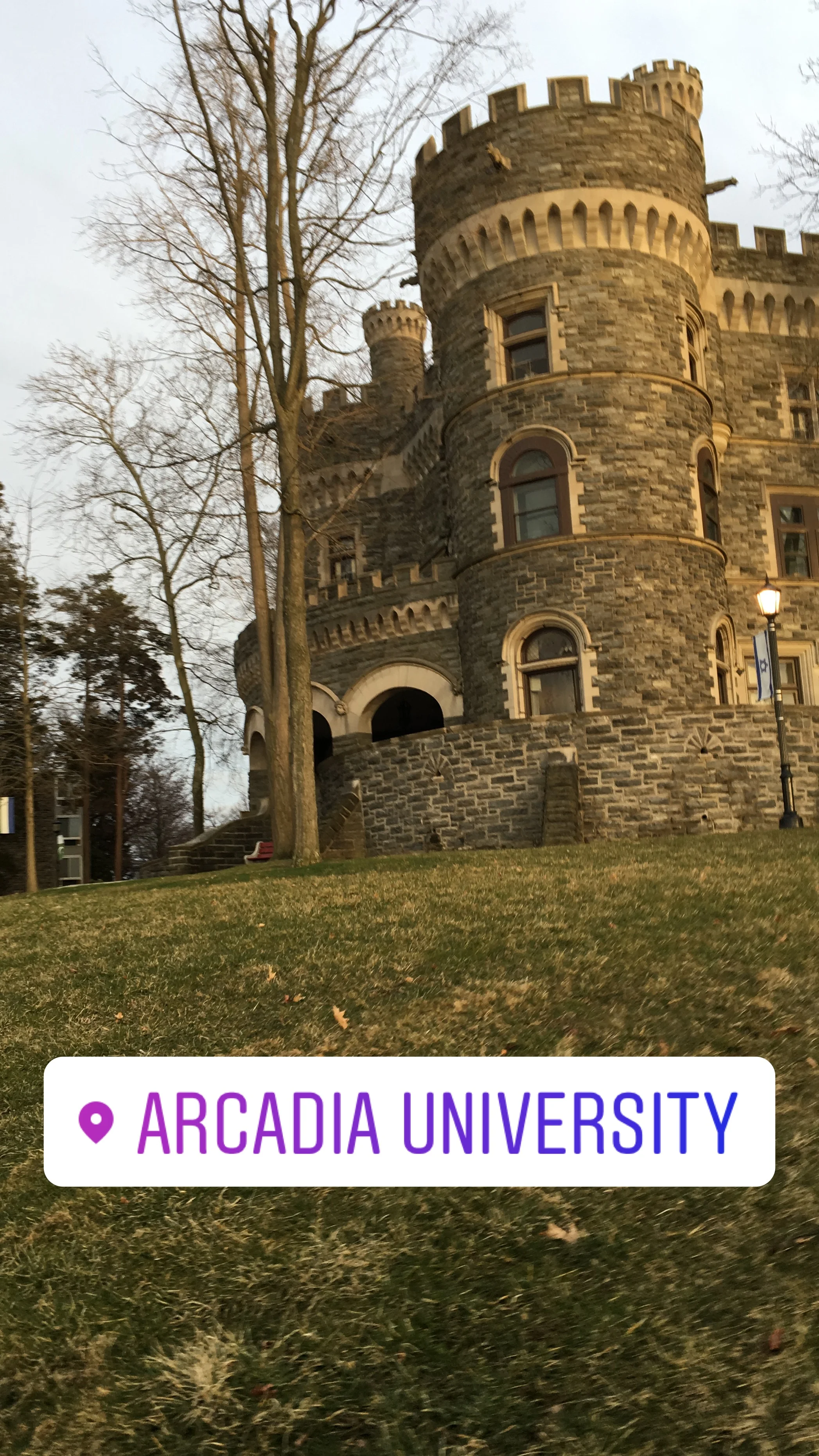
The magnificent Grey Towers castle.


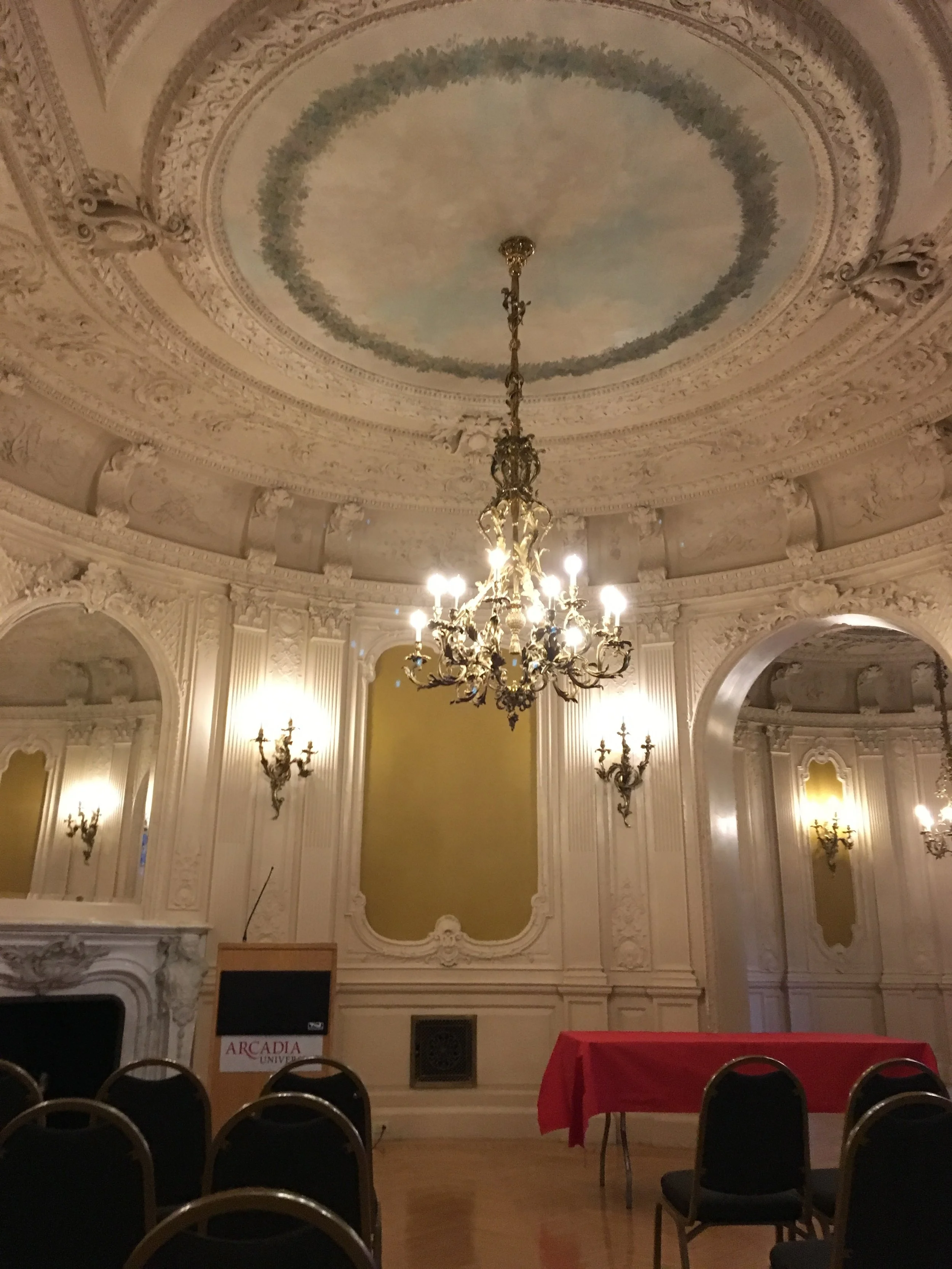
Designed by American architect, Horace Trumbauer, we were all captivated by Gothic elements of the building; the dome ceiling, mahogany railings, and grand staircase of scarlet carpet captivated us all. Many college artifacts line the walls in shadowboxes and casements. Once the mirth gravitated to the majestic Rose Room, the magic began to happen. Bright, refreshing, and adorned with After a brief introduction by the creative writing MFA director, Josh Isard, the author herself took the podium...
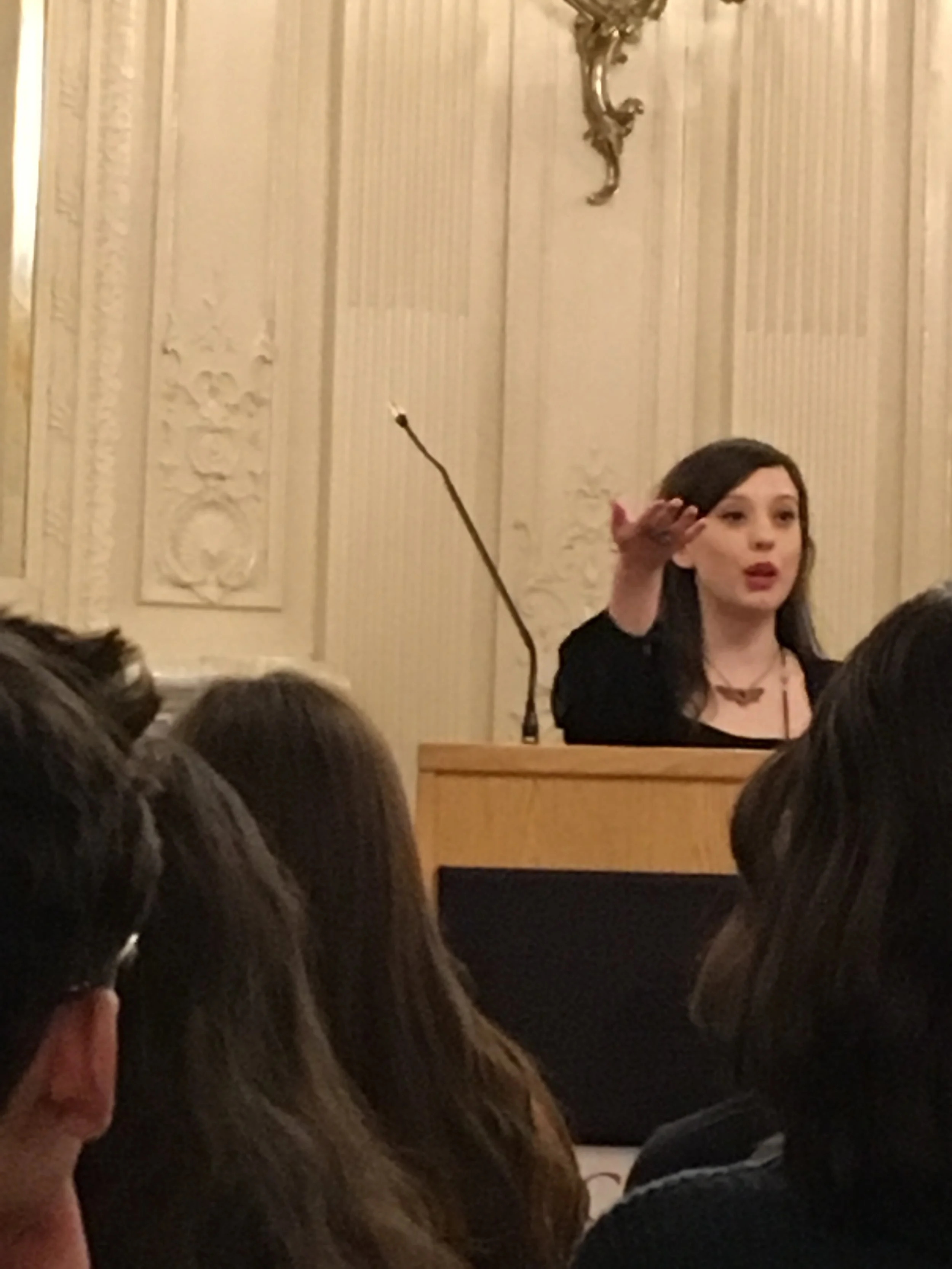
Kailey Tedesco addressing the crowd prior to the reading.
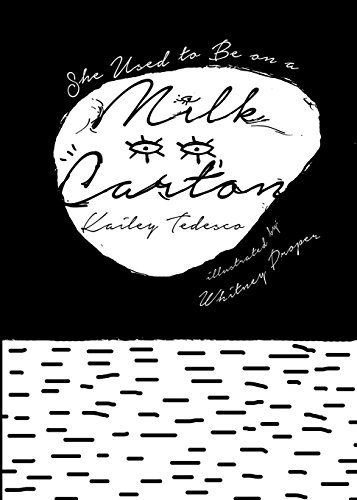
Ms. Tedesco needed no amplification for the reading. The acoustics of the room swirled her poems into a whirlwind. Straight from her newest poetry collection, She Used to Be on a Milk Carton, listen to a piece here...
Kailey reading "Up from the Salt Cellar"
After a well-deserved round of applause, the staff of April Gloaming Publishing walked to center stage and a Q&A occurred. Being a publisher myself, it was a pleasant surprise to have the work and the philosophy in direct conversation.
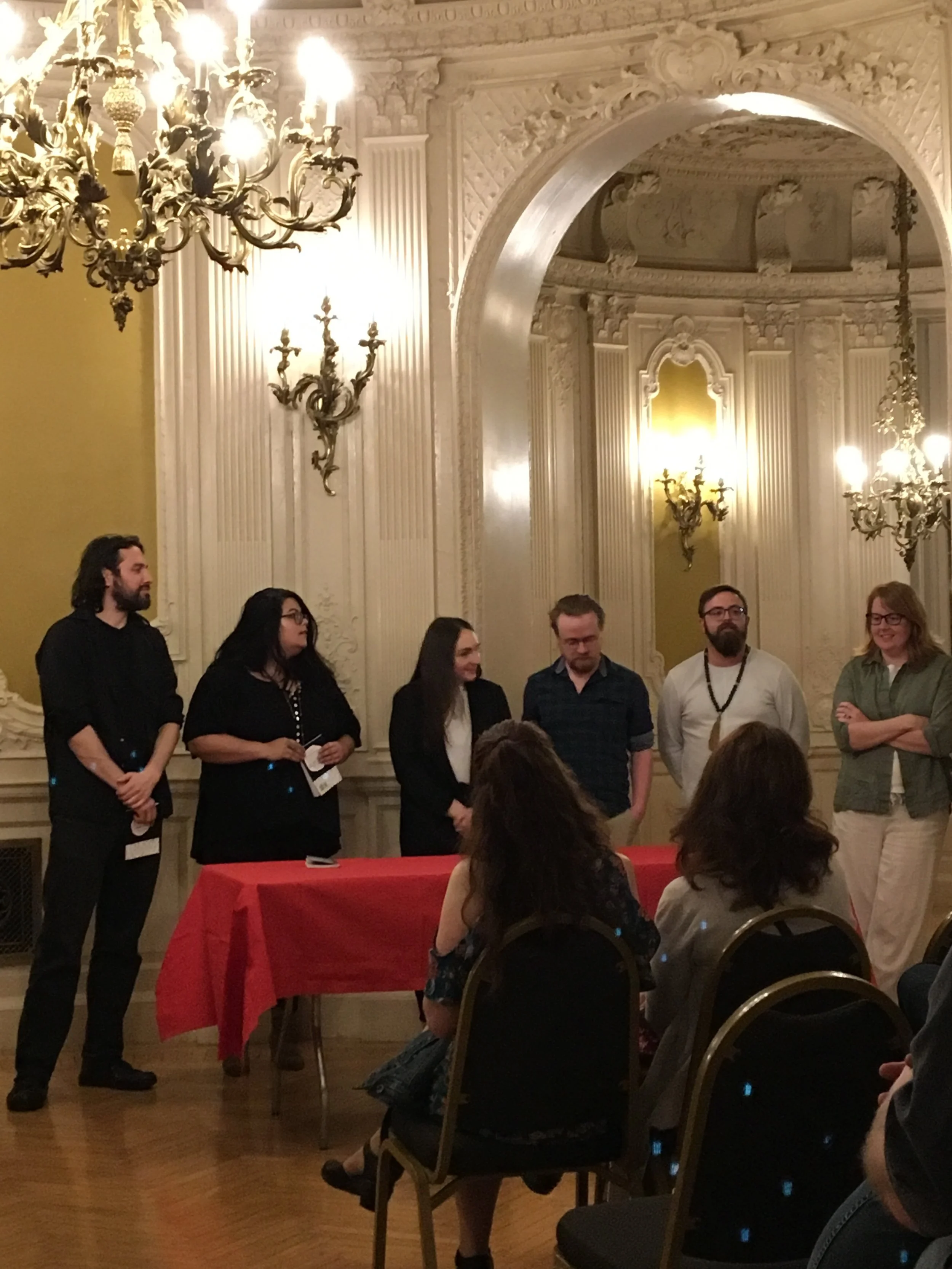
The crew of April Gloaming including illustrator, Whitney Proper.
I was able to ask editor-in-chief, Lance Umenhofer, how the Nashville literary scene is like and how would Kailey's book 'fit in'. Being a fan of Southern Gothic, the occult, and all things weird, he said that Nashville is infantile, malleable, and ready to accept new voices, be it from their own backyard or afar. He stated that April Gloaming is leading the charge in adding the art of literature to a music-heavy city, and there's much room for inclusion! The night wrapped up after that and I was able to add two more of April Gloaming's finest to my bookshelf:

The portrait of the artist with her new book!
From the ambiance, to the work itself, to the collective energy of everyone in attendance, I know that one won't soon forget such a moment for Kailey Tedesco. April Gloaming is a publisher worth supporting and boast an eclectic mix of work that you should check out. Below are some links for She Used to Be on a Milk Carton as well as April Gloaming.
Until next time, thanks for reading The Weekly Degree!
--Josh
Kailey Tedesco is the author of two poetry books, She Used to be on a Milk Carton and These Ghosts of Mine, Siamese. Her poetry and essays all tend to focus on occult themes, witchcraft, gothic imagery, Catholicism, girlhood, kitsch, and confessional writings. She is most consistently inspired by David Lynch, Shirley Jackson, and the Lizzie Borden trials. She has been nominated for the Pushcart Prize, and her work has been written about in publications such as New Pages, Beach Sloth, and others.
Tilde's release party: A recap
Tilde, which was conceived in September 2017, is a new venture of Thirty West. Sporting poetry, prose, and visual arts on a global scale, the themeless first issue received over 500 submissions, containing exponentially more individual pieces. We had no idea what to expect, and read wonderful content enough for an entire year. It was a bittersweet journey, but it is done. Let us tell you how it all ended...
March 23rd, 2018

Tilde: A Literary Journal: Issue 1 spread
For the month of March, the Tilde team worked fastidiously to assemble the journal. There were some expected, and unexpected, hold-ups, many rounds of proofing, and bouncebacks from potential venues to host us. Aspirations were dwindling until we got a fulfilling email from a local venue.
Nestled in the heart of the Manayunk neighborhood of Philadelphia, on Cotton Street, The Spiral Bookcase, with its periwinkle brick facade, opened their doors for the release of Tilde. Their intimate setting was inviting for all the attendants, with rows of books to casually peruse through. Occasionally, Amelia, the calico cat, would meow and hop on the lap on an attendee. On top of that, they had friendly and accommodating staff who ensured a perfect event. The dozens arrived, indulged in hors d'oeuvres, and stood patiently for the first word.
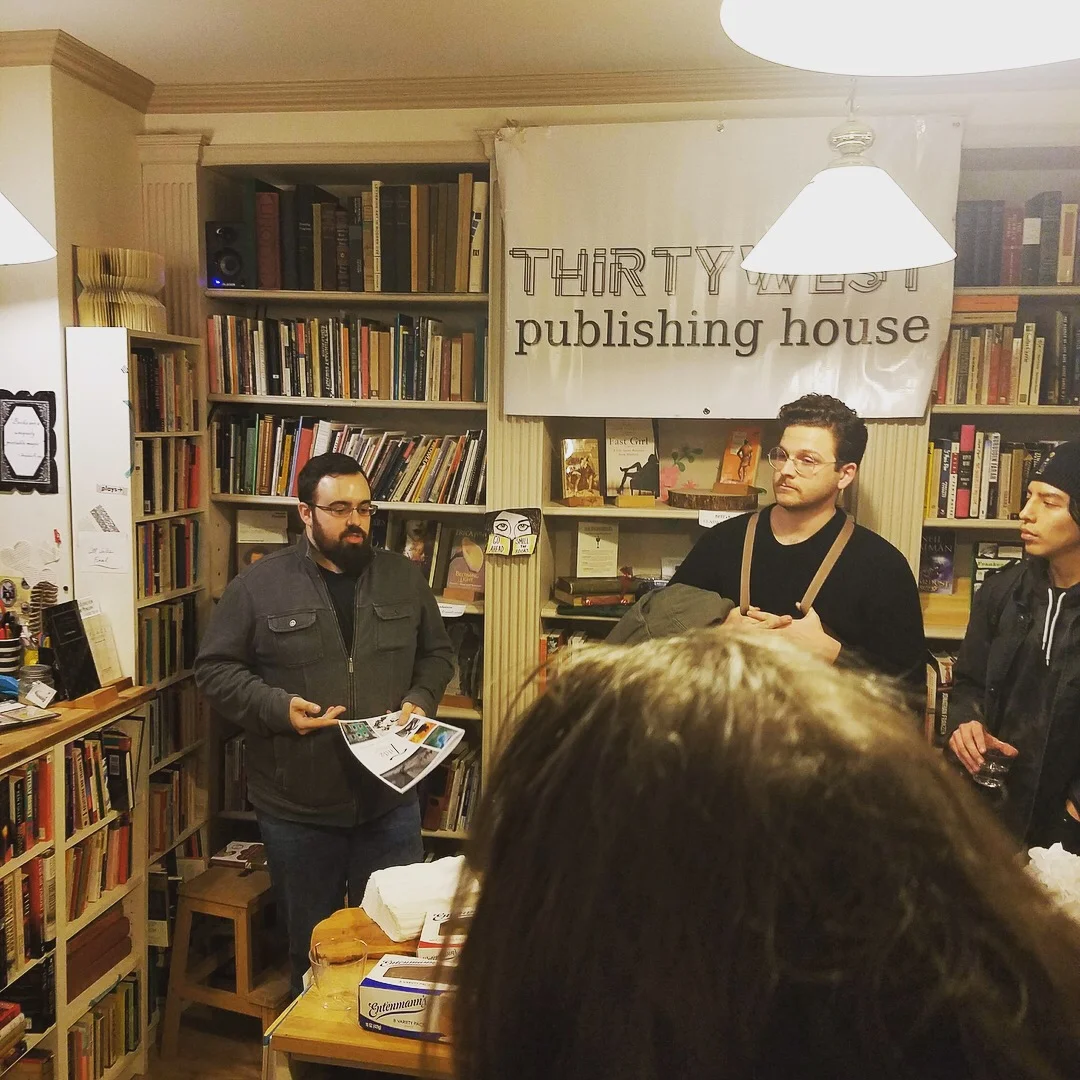
Editor-in-chief, Josh Dale, kicks off with the editor's note. (Right) Fiction editor, Nick McMenamin.
Josh began the reading with the editor's note, based off of sea turtles. The patrons, raising their copies akin to hymnals, read along or stared attentively. It was only the beginning of a memorable night with five Tilde contributors that are local to the Philadelphia area.
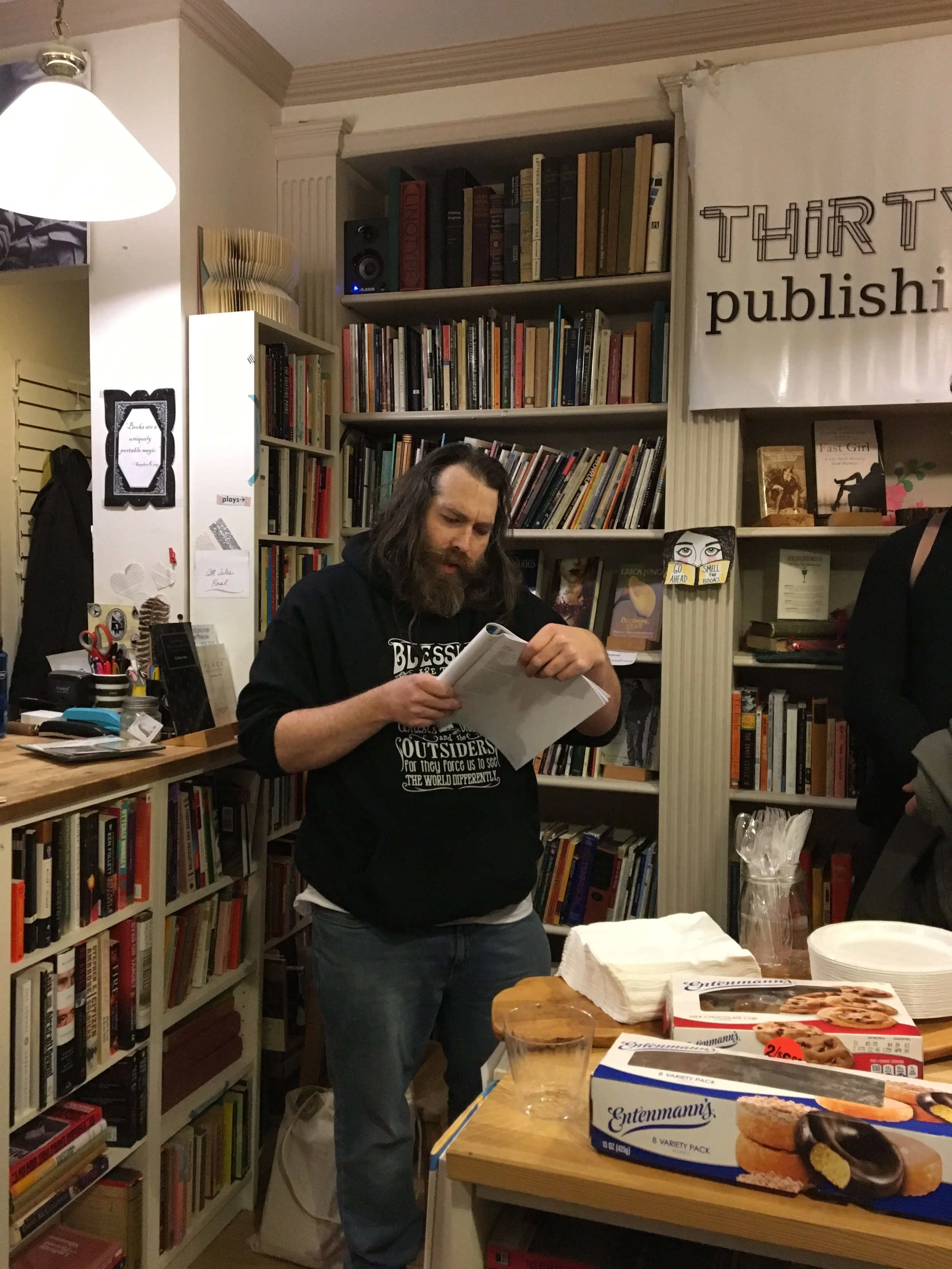
Heath Brougher reading his intense poems in Tilde.
Our first reader was Heath Brougher based out of York, PA. His work is cerebral and hypercritical to society. He also read from his other collections, which made all of us ponder.
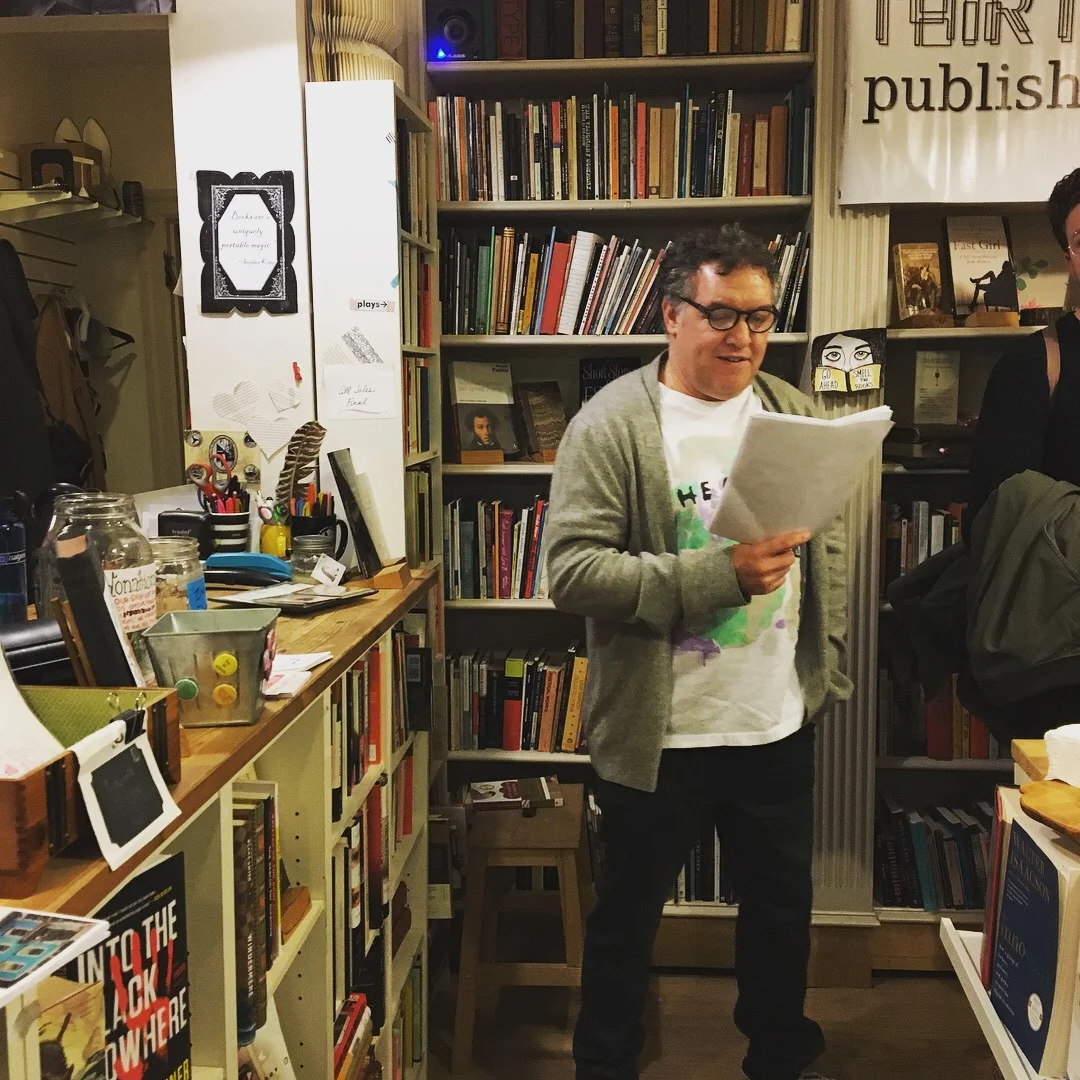
Randall Brown, sifting through many short fiction pieces.
Up next was Randall Brown. He is part of Rosemont College's MFA faculty and a masterful short story and flash fiction writer. His pieces were visually appealing, humorous, and vivacious for life. The occasional chuckle would rise and fall with every beat of his reading.
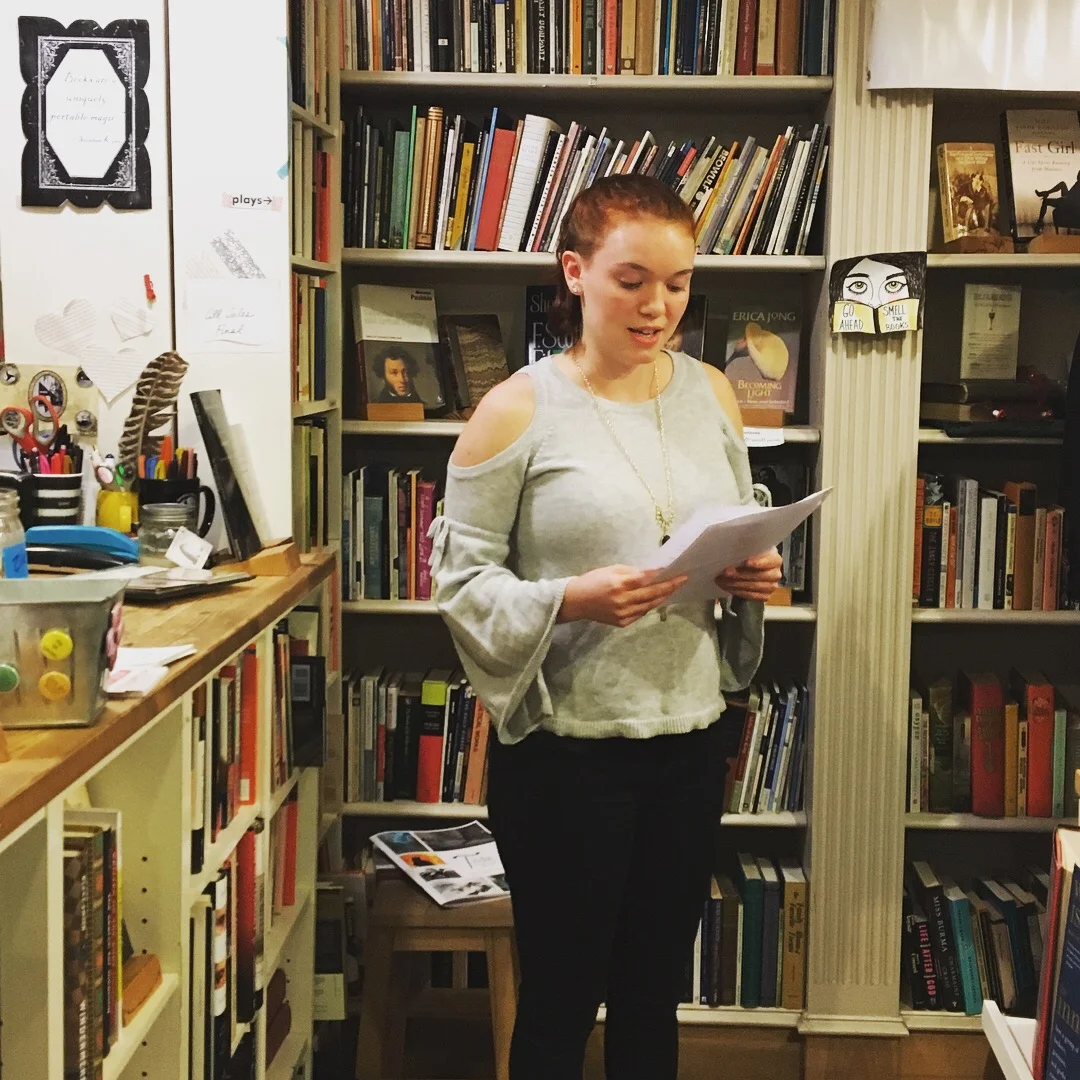
Morgan Smith reading her short story, Don't Speak Ill of the Dead.
Arguably the youngest contributor of Tilde, Morgan Smith, a Bryn Mawr college freshman, captivated the audience with a harrowing tale of domestic proportions. Much applause was saved for the end and aspirations of a budding career.
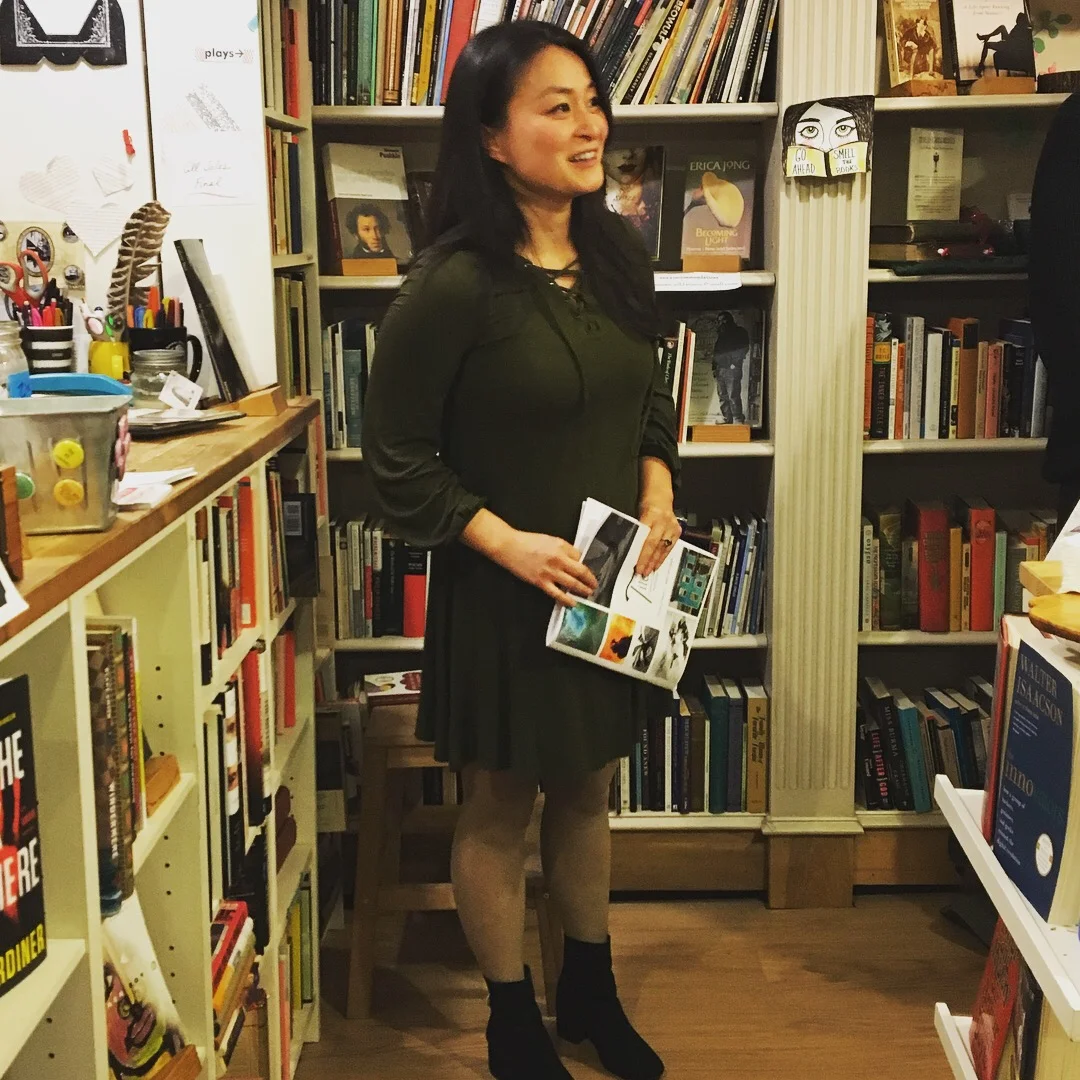
Sunny Reed recounting memories of writing her Tilde memoir, The Lucky Ones.
Hailing from Southern NJ, Sunny Reed was next to take the 'corner'. She was elated to read her first publication with us, part of an autoethnography as an Asian adoptee. A heart-warming account of motherhood soothed us all, bringing some to tears.
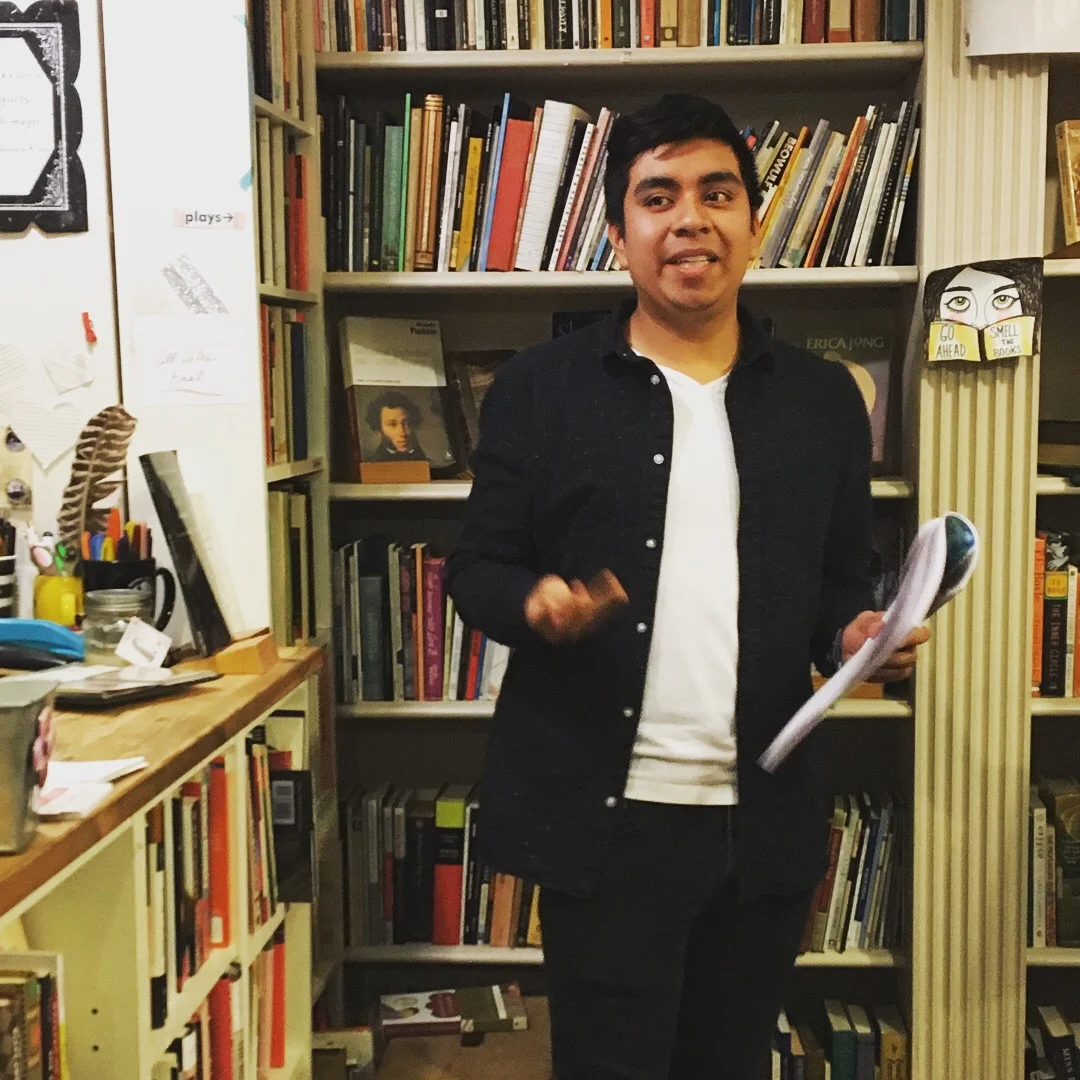
Oscar Vargas closing out the night with serenading poetry.
Our final feature of the night was Oscar Vargas, an MFA student from Brooklyn College. He joked about the bus ride down here before flooring us with a bilingual poetry reading of Spanish & English. His inflections were a light breeze in spring.
The night concluded with good banter, acknowledgments, newfound friendships, and a promising outlook of a new international journal. The lights may have been turned off and the door locked, but Tilde's inaugural debut will remain with us forever.
Acknowledgments
Thank you, firstly, to our editors, Nick McMenamin, Bob Kaplan, Tara Tomaino, Carrie Soltner, and Alex Breth for making this journal come to fruition with your dedication. Also, thank you to the scores of readers for helping us sift through the madness. Lastly, to every contributor, you had faith in us when we were nothing. Now, we want to share a collective success with you in any way we can.
Want to read Tilde?
A free PDF can be found here. Print editions are available at the 30W Shop and ship internationally.
John Updike: Interview by Donald M. Murray
Since it is John Updike's 86th birthday, a Pultizer prize winning author of fiction , poetry, and criticism, we are happy to share a wonderful interview that captures the essence of his creative pursuits in multiple forms. Hope you enjoy!

Scott Thomas Outlar: A Poetry Reading
Today, we have a stellar poetry reading by highly-acclaimed poet and former TWP feature, Scott Thomas Outlar! Below is his bio for further reading.
Scott Thomas Outlar hosts the site 17Numa.wordpress.com where links to his published poetry, fiction, essays, interviews, reviews, live events, and books can be found. His work has been nominated for the Pushcart Prize and Best of the Net. Scott was a recipient of the 2017 Setu Magazine Award for Excellence in the field of literature. His words has been translated into Albanian, Afrikaans, Persian, Serbian, French, and Italian. His books include Songs of a Dissident (Transcendent Zero Press, 2015); Chaos Songs (Weasel Press, 2016); Happy Hour Hallelujah (CTU Publishing, 2016); and Poison in Paradise (Alien Buddha Press, 2017).
All the Ghosts We've Always Had Promotion

It's been over a week since the release of our 10th publication, All the Ghosts We've Always Had, and it has been a big hit! The ghosts have been heard all over the U.S. and into Canada and the U.K. Below, are a few blogs about the book for your reading pleasure; one by Jules Archer herself. Enjoy!
Interested? Intrigued? Hungry?? Grab your copy right here!
